
Goat Feeding & Nutrition in India
Practical Feeding Strategies for Healthy Growth, Low Cost and Profitable Goat Farming
Feeding is the backbone of successful goat farming. More goats fail due to wrong feeding practices than due to disease or market price. In India, most goat farmers operate under feed scarcity, seasonal fodder availability and rising concentrate costs. Therefore, goat nutrition cannot be copied from textbook models or foreign systems. It must be simple, adaptable and cost-controlled, suited to Indian realities.
Many farmers complain that goats do not gain weight, kids remain weak, or animals fall sick frequently despite feeding “well.” In most cases, the issue is not quantity of feed, but imbalance, poor roughage quality and sudden feeding changes. Understanding basic goat nutrition helps farmers reduce losses and improve growth without increasing expenses.
Understanding How Goats Eat and Digest Feed
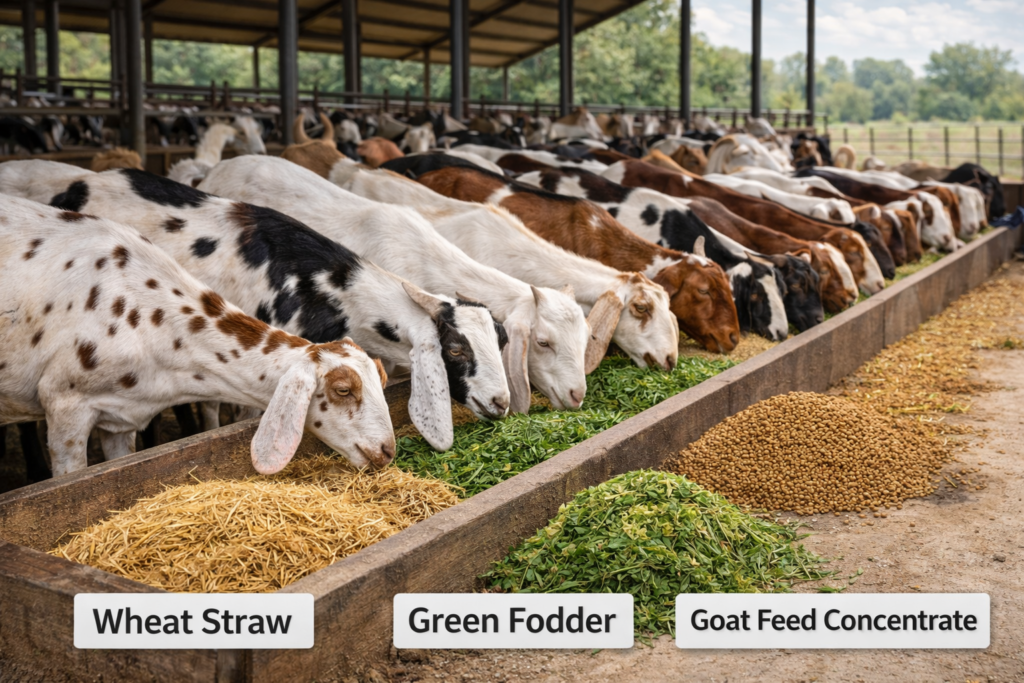
Goats are natural browsers. Unlike cattle, they prefer variety and selective feeding. Their digestive system is designed to handle fibrous feeds, but only when roughage quality and balance are maintained. Goats eat small amounts multiple times a day, and their feed intake drops sharply if feed is stale, dusty or moldy.
This means feeding goats is not about dumping feed in a manger. It is about palatability, cleanliness and consistency.
Roughage: The Foundation of Goat Feeding
Roughage forms the base of goat nutrition in India. It includes green fodder, dry fodder and browsing material. A common mistake is overdependence on concentrate while neglecting roughage quality.
Green fodder improves digestion, appetite and overall health, but in many regions it is not available year-round. Therefore, farmers must rely heavily on dry fodder such as straw and locally available grasses. Dry fodder alone cannot support good growth unless supported by balanced supplementation.
Goats perform best when roughage is clean, free from fungus and offered in chopped or manageable form. Poor quality roughage directly reduces feed intake, which then affects weight gain and immunity.
Concentrate Feeding: Support, Not the Base
Concentrate feed is meant to support growth and production, not replace roughage. One of the biggest feeding mistakes is giving excess concentrate in the hope of faster weight gain. This often results in digestive upset, poor rumen function and wasted money.
Concentrate feeding should always match:
- Age of the goat
- Growth stage
- Body condition
- Availability of roughage
Young kids, pregnant does and fast-growing animals need more nutrient-dense feed, but always in controlled amounts. Sudden increase in concentrate almost always leads to problems.
Feeding Kids: The Most Sensitive Phase
The future of a goat farm depends on how kids are fed. Most mortality and stunted growth occur during the first few months of life. Kids need gradual transition from milk to solid feed. Early exposure to clean roughage and small amounts of concentrate helps rumen development and improves long-term growth.
Poor kid feeding results in weak animals that never reach their genetic potential, no matter how much they are fed later.
Feeding Does: Growth, Pregnancy and Lactation
Does require different feeding strategies at different stages. During early pregnancy, maintenance feeding is sufficient. During late pregnancy, nutrient demand increases sharply. Underfeeding at this stage leads to weak kids, poor milk production and delayed recovery.
After kidding, does need balanced feeding to support milk for kids and regain body condition. Many farmers ignore this phase, leading to weight loss and delayed breeding cycles.
Feeding Bucks: Often Ignored, Always Important
Breeding bucks are frequently underfed or fed randomly. A weak buck affects the entire herd’s reproductive performance. Bucks need consistent nutrition to maintain body condition and fertility, especially during the breeding season.
Mineral Mixture and Micronutrients
Mineral deficiency is one of the most overlooked problems in goat farming. Deficiencies do not show immediate symptoms but cause poor growth, weak immunity, reproductive failure and low kid survival.
Regular mineral supplementation improves:
- Feed utilization
- Growth rate
- Fertility
- Disease resistance
Minerals are not optional; they are a basic requirement, especially in stall-fed and semi-intensive systems.
Water: The Forgotten Nutrient
Clean drinking water is as important as feed. Reduced water intake directly lowers feed intake and slows growth. Goats should always have access to clean, fresh water, especially during hot weather and after feeding concentrate.
Common Feeding Mistakes That Increase Cost
Many farmers unknowingly increase feeding cost while reducing performance. Feeding spoiled fodder, sudden diet changes, overfeeding concentrate, ignoring minerals and irregular feeding timing all reduce efficiency.
Correcting these mistakes often improves growth without adding any new feed cost.
Feeding and Profit: The Direct Connection
In goat farming, profit depends on cost per kg body weight gain, not on total feed given. Efficient feeding means more growth from the same feed. Poor feeding means higher cost and lower market value.
Farmers who understand feeding basics are better prepared to:
- Control expenses
- Reduce mortality
- Improve market weight timing
This understanding is essential before using feeding charts or calculators.
Final Perspective for Goat Farmers
Goat feeding does not need to be complicated or expensive. It needs to be balanced, consistent and suited to local conditions. The best feeding system is not the one with the most concentrate, but the one where goats eat well, stay healthy and grow steadily.
When feeding is correct, disease reduces, growth improves and profit becomes predictable.
बकरी का आहार और पोषण – हिंदी सारांश (व्यावहारिक दृष्टिकोण)
बकरी पालन में सबसे ज़्यादा नुकसान बीमारी या बाज़ार भाव से नहीं, बल्कि गलत फीडिंग और पोषण की समझ की कमी से होता है। बहुत से किसान मानते हैं कि ज़्यादा दाना देने से बकरी जल्दी बढ़ेगी, लेकिन असलियत यह है कि बकरी का शरीर गलत आहार को बिल्कुल बर्दाश्त नहीं करता। सही आहार वही है जो पाचन के अनुसार संतुलित हो, लगातार दिया जाए और स्थानीय संसाधनों के अनुकूल हो।
भारत में ज़्यादातर बकरी पालन फीड की कमी, महंगे कंसन्ट्रेट और मौसमी चारे की समस्या से जूझता है। इसलिए बकरी का पोषण किसी विदेशी मॉडल पर नहीं, बल्कि भारतीय ज़मीनी हकीकत पर आधारित होना चाहिए।
बकरी कैसे खाती और पचाती है
बकरी स्वभाव से चरने वाली नहीं, बल्कि ब्राउज़र होती है। वह थोड़ा-थोड़ा करके कई बार खाती है और साफ, स्वादिष्ट चारे को प्राथमिकता देती है। बासी, फफूंदी लगा या धूल भरा चारा बकरी तुरंत छोड़ देती है, जिससे उसका फीड इंटेक कम हो जाता है।
बकरी का पाचन तंत्र तेज़ होता है और अचानक फीड बदलने पर वह जल्दी बिगड़ जाता है। इसी वजह से फीड में बदलाव धीरे-धीरे करना सबसे ज़रूरी नियम है।
रफेज – बकरी के आहार की नींव
बकरी के आहार में हरा और सूखा चारा सबसे महत्वपूर्ण होता है। हरा चारा पाचन सुधारता है, लेकिन पूरे साल हर जगह उपलब्ध नहीं होता। ऐसे में सूखा चारा (भूसा, सूखी घास) ही आधार बनता है।
लेकिन केवल सूखा चारा देने से बकरी का विकास नहीं हो सकता। अगर चारा घटिया है या बहुत मोटा है, तो बकरी उसे सही से नहीं खा पाती और पोषण की कमी हो जाती है। इसलिए चारे की गुणवत्ता और साफ-सफाई बेहद ज़रूरी है।
कंसन्ट्रेट – सहायक, आधार नहीं
कंसन्ट्रेट का काम बकरी के आहार को सपोर्ट करना है, उसे बदलना नहीं। ज़्यादा दाना देने से बकरी का पेट खराब होता है, गैस बनती है और कई बार एंटरोटॉक्सिमिया जैसी खतरनाक बीमारी भी हो जाती है।
कंसन्ट्रेट हमेशा:
- उम्र
- वजन
- गर्भावस्था
- वृद्धि की अवस्था
को ध्यान में रखकर सीमित मात्रा में देना चाहिए।
बच्चों का आहार – फार्म का भविष्य
बकरी पालन की असली सफलता बच्चों की सही परवरिश पर निर्भर करती है। जन्म के बाद शुरुआती दिनों में सही दूध, साफ वातावरण और धीरे-धीरे ठोस आहार से परिचय बहुत ज़रूरी होता है।
अगर बच्चे इस समय कमजोर रह गए, तो बाद में कितना भी दाना दें, वे कभी अपनी पूरी क्षमता तक नहीं पहुँच पाते।
मादा बकरी (डो) का पोषण
गर्भावस्था और बच्चे देने के बाद मादा बकरी को विशेष पोषण की ज़रूरत होती है। इस समय अगर आहार कमज़ोर हुआ, तो:
- बच्चे कमजोर पैदा होते हैं
- दूध कम बनता है
- अगली गर्भधारण में देरी होती है
इस चरण में संतुलित आहार बकरी पालन की रीढ़ बन जाता है।
नर बकरी (बक) का पोषण
अक्सर नर बकरी के आहार को नज़रअंदाज़ कर दिया जाता है, जबकि वही पूरे झुंड के प्रजनन को प्रभावित करता है। कमजोर बक से पूरा फार्म प्रभावित होता है। इसलिए उसका आहार नियमित और संतुलित होना चाहिए।
मिनरल मिक्सचर और सूक्ष्म पोषक तत्व
मिनरल की कमी धीरे-धीरे असर दिखाती है, लेकिन नुकसान गहरा करती है। इससे:
- वृद्धि रुक जाती है
- रोग प्रतिरोधक क्षमता घटती है
- प्रजनन में समस्या आती है
इसलिए मिनरल मिक्सचर बकरी के आहार का अनिवार्य हिस्सा है, कोई वैकल्पिक चीज़ नहीं।
पानी – सबसे ज़्यादा नज़रअंदाज़ किया गया पोषक तत्व
अगर पानी कम या गंदा हो, तो बकरी कम खाएगी। कम खाना मतलब धीमी वृद्धि और कमजोर शरीर। साफ और ताज़ा पानी हर समय उपलब्ध होना चाहिए, खासकर गर्मी में।
❌ आम फीडिंग गलतियाँ
किसान अक्सर अनजाने में ऐसी गलतियाँ कर देते हैं जिससे खर्च बढ़ जाता है और लाभ घट जाता है, जैसे:
- अचानक फीड बदल देना
- खराब या फफूंदी लगा चारा देना
- ज़्यादा दाना देना
- मिनरल को नज़रअंदाज़ करना
इन गलतियों को सुधारने से बिना अतिरिक्त खर्च के भी परिणाम सुधर सकते हैं।
फीडिंग और मुनाफे का सीधा संबंध
बकरी पालन में मुनाफा इस बात पर निर्भर करता है कि एक किलो वजन बढ़ाने में कितना खर्च आया। सही फीडिंग से:
- वजन तेजी से और स्वस्थ तरीके से बढ़ता है
- बीमारी कम होती है
- दवा का खर्च घटता है
आगे के टूल्स और कैलकुलेटर की तैयारी
जब किसान बकरी के पोषण की बुनियादी समझ बना लेता है, तब फीडिंग चार्ट, कैलकुलेटर और प्लानिंग टूल्स उसे भ्रमित नहीं करते, बल्कि मदद करते हैं।
✅ अंतिम संदेश
बकरी का आहार न तो बहुत महंगा होना चाहिए और न ही बहुत जटिल। उसे बस संतुलित, साफ और लगातार होना चाहिए।
सही पोषण से बकरी स्वस्थ रहती है, विकास बेहतर होता है और बकरी पालन लाभकारी बनता है।