Goat/Sheep Farming in India
The Rising Goat & Sheep Sector and Practical Veterinary Guidance for Sustainable Success
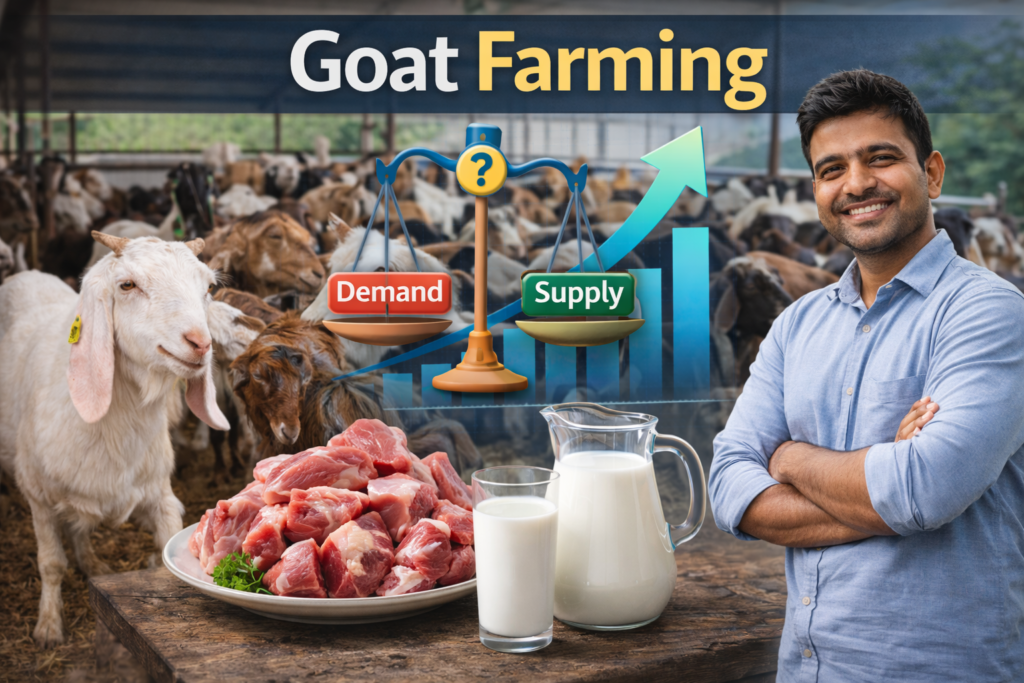
Goat farming in India is no longer limited to marginal or subsistence livestock keeping. Over the last decade, the goat and sheep sector has emerged as one of the fastest growing segments within Indian livestock agriculture, attracting not only small farmers but also rural entrepreneurs, youth, and investors looking for low-to-medium risk agribusiness opportunities.
The growing interest in goat farming is driven by a combination of strong meat demand, lower entry barriers compared to dairy, adaptability of goats to diverse Indian climates, and increasing awareness of scientific management practices. At the same time, many new entrants face serious challenges related to disease losses, feeding costs, poor survival in the first few months, and lack of reliable technical guidance.
This Goat section at Ali Veterinary Wisdom is designed to bridge that exact gap — between opportunity and execution.
Why Goat & Sheep Farming Is Growing Rapidly in India
India has one of the largest goat populations in the world, and goat meat remains widely accepted across regions, communities, and market segments. Unlike poultry or dairy, goat meat prices are relatively stable and less affected by sudden oversupply. This makes goat farming attractive for farmers who want price resilience and flexible selling options.
Another major reason for rising interest is that goats can be raised under multiple systems — backyard, semi-intensive, and commercial — depending on land availability, labour, and investment capacity. This flexibility allows farmers to start small and scale gradually, which is especially appealing to beginners and first-generation livestock farmers.
Sheep farming also follows similar growth trends in dry and semi-arid regions, where goats and sheep are often integrated into mixed farming systems. Together, goats and sheep play a crucial role in livelihood security, meat supply, and rural income diversification.
The Reality Behind the Opportunity
Despite its potential, goat farming is often misunderstood. Many people enter the sector believing it to be “easy” or “low management,” only to face heavy losses in the early stages. In reality, most goat farms fail not due to lack of demand, but due to poor technical handling, especially during:
- New farm setup and animal purchase
- Transport and adaptation stress
- Feeding transitions from grazing to stall systems
- Disease outbreaks in the first 60–90 days
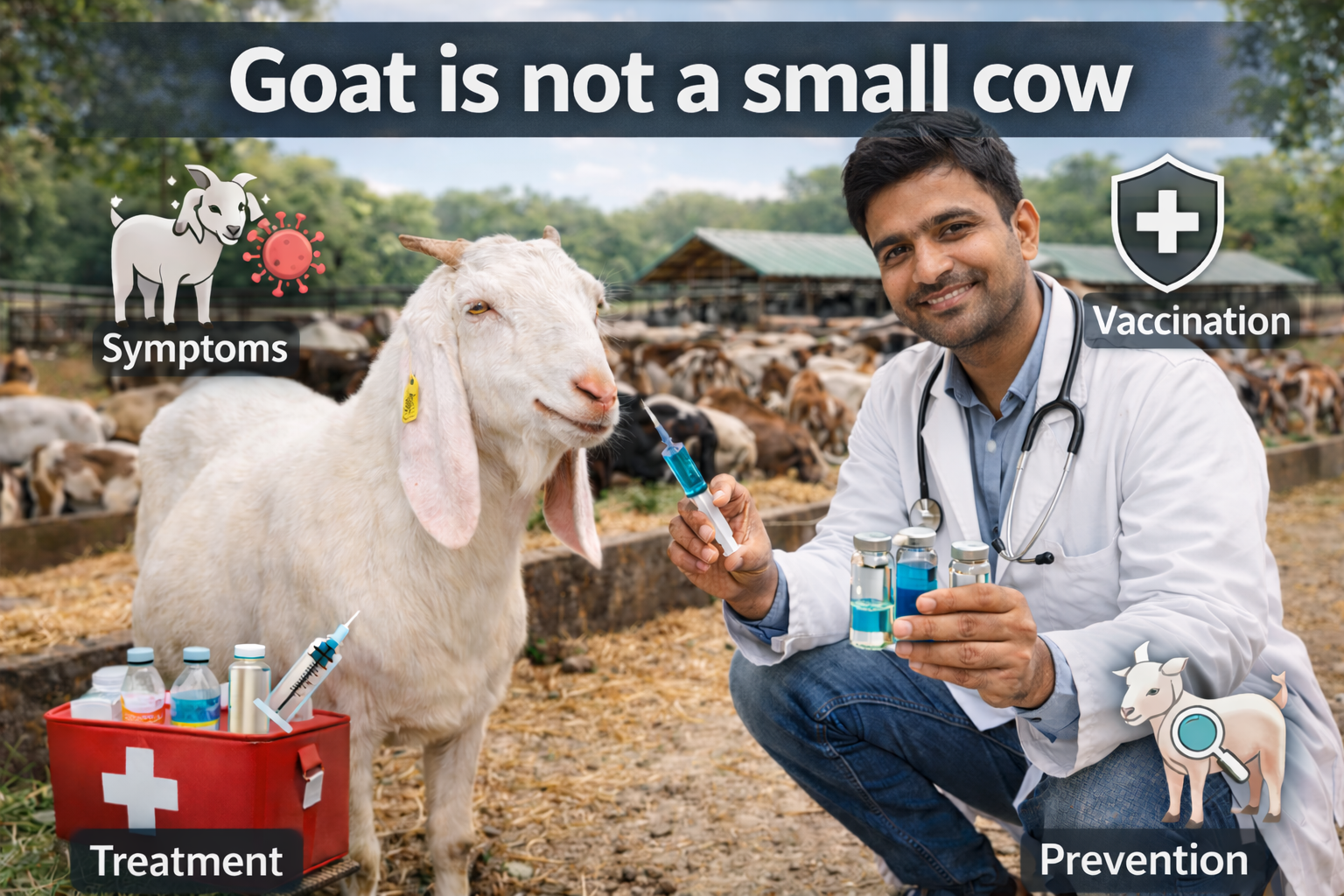
Goats are biologically sensitive animals with faster metabolism and different disease and drug responses compared to cattle. Treating goats as “small cows” is one of the most common and costly mistakes in the sector. Without correct feeding balance, health planning, and stress management, even good breeds fail to perform.
This is where veterinary-based, goat-specific guidance becomes critical.
The Need for Scientific and Veterinary-Led Goat Farming
Traditional knowledge alone is no longer sufficient in modern goat farming. Changes in climate, feed availability, disease patterns, and market expectations require farmers to understand goat biology, nutrition, health, and reproduction scientifically, while still keeping practices practical and affordable.
Successful goat farming today depends on:
- Correct breed selection for local conditions
- Feeding strategies that control cost while supporting growth
- Preventive health and vaccination planning
- Understanding why medicines behave differently in goats
- Managing stress during transport, housing changes, and breeding
Farmers who combine practical experience with technical knowledge are far more likely to achieve stable survival, predictable growth, and long-term profitability.
How Ali Veterinary Wisdom Supports Goat Farmers
Ali Veterinary Wisdom was created with a clear purpose: to provide practical, field-oriented veterinary knowledge to livestock farmers who do not have easy access to reliable technical guidance.
In the goat and sheep sector, our support focuses on helping farmers survive the critical early phase and build a sustainable system, not just chase numbers on paper.
1. Online Goat Farming Training
Our structured online training programs explain goat farming from the ground up, with special emphasis on:
- New farm setup and adaptation management
- Feeding under Indian conditions
- Disease prevention and treatment logic
- Understanding why goats are not small cows
- Avoiding common beginner mistakes
The training is designed so that farmers can apply concepts immediately on their farms, even with limited resources.
2. Direct Veterinary Consultancy
Many goat farmers face urgent problems related to disease outbreaks, poor growth, or repeated losses. Through direct consultancy, we help farmers:
- Analyze problems correctly
- Avoid unnecessary or harmful treatments
- Improve survival and reduce recurring losses
- Make better decisions for feeding and health
This personalized guidance often saves farms from collapse during their most vulnerable phase.
3. Educational YouTube Content
Our YouTube videos provide free, accessible education on goat farming topics such as feeding mistakes, disease prevention, breeding issues, and real-world case discussions. These videos are especially helpful for farmers who learn better through visual and spoken explanations.
What You Will Find in This Goat Farming Section
This Goat Farming section is structured to guide farmers step by step through all major aspects of goat and sheep farming, including:
- Goat farm setup and housing
- Feeding and nutrition under Indian conditions
- Common goat diseases and prevention
- Goat breeds and regional suitability
- Goat fattening and market-oriented systems
- Kid and lamb management
- Profit logic and business planning
Each topic is explained with a focus on survival, practicality, and decision-making, not theoretical perfection.
A Sustainable Future for Goat & Sheep Farming
The future of goat and sheep farming in India is strong, but only for those who approach it with discipline, patience, and correct technical understanding. Farms that survive the early shocks, control losses, and respect goat biology often go on to become stable, profitable enterprises.
At Ali Veterinary Wisdom, our goal is not to oversell goat farming, but to prepare farmers to handle reality — so that opportunity turns into long-term success.
Explore the sections below to learn, plan, and build your goat farming journey with clarity and confidence.
🐐Dairy Goats Management
Dairy goat farming basics including suitable breeds, milk production potential, feeding needs and management practices for small and medium farms.
🦠 Goat & Sheep Diseases
Common goat and sheep diseases, transport stress problems, vaccination basics and preventive health management explained for Indian farming conditions.
🌽 Goat & Sheep Nutrition
Balanced feeding strategies for goats and sheep using roughage, concentrates and minerals and supplements to improve growth, FCR, survival and cost efficiency. Best cost effective practices.
🐐 Goat Fattening Bakra Eid
Goat fattening methods for Bakra Eid focusing on breed choice, feeding intensity, health care and market-ready weight gain.
🐑 Goat Kids & Lamb Management
Care of newborn goat kids and lambs including colostrum feeding, early nutrition, disease prevention and survival-focused.
🏠 Goat/Sheep Housing & Breeding
Goat and sheep housing, ventilation, hygiene, heat detection, breeding timing and reproductive management
Online Goat Training on Ali Veterinary Wisdom App
Popular/featured articles
- Dairy Feed Management
- Silage Dry Matter
- Causes and Treatment of Lameness in Poultry
- Broiler Farming in Hindi Guide
- Cow Not Eating, Cow Not Giving Milk, Cow Not Standing Up
Connect us on WhatsApp Click Below
Consultation Charges & Guidelines
Your suggestions and quries are more than welcome, help us to improve our Ali Veterinary Wisdom initiative