
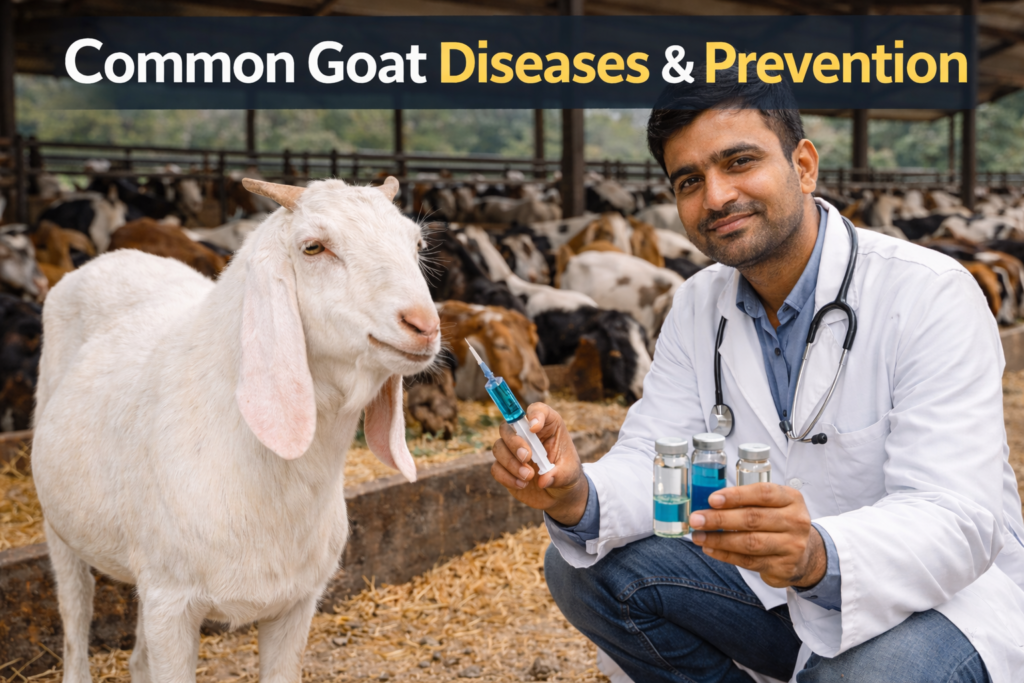
Common Goat Diseases and Prevention
Why Newly Purchased Goats Fall Sick and How to Protect Your Goat Farming Business from Collapse
In goat farming, most failures do not happen after one or two years. They happen within the first 30–90 days of starting the farm. This is the phase when new farmers feel confused, helpless and often hopeless. Animals start falling sick one by one, medicines do not seem to work, expenses increase rapidly, and confidence breaks down.
In reality, this phase is not a disease problem.
It is an adaptation and transition problem, and if handled correctly, your goat farming business can survive and grow. If ignored, even the best breeds and biggest investments can collapse.
This guide focuses on the most critical disease phase in goat farming: newly purchased animals and farm startup stress, something that most farmers and even many veterinarians fail to explain properly.
The Real Reason New Goats Fall Sick After Purchase
Most goats purchased to start a new farm come from open grazing systems. They are used to:
- Walking long distances
- Eating diverse natural vegetation
- Open air and sunlight
- Low-density animal groups
When these animals are suddenly transported and placed into a closed or semi-closed farm system, their entire biological rhythm is disturbed. Transport stress, unfamiliar feed, new water, new microbes, confinement and social stress together create what is known as adaptation shock.
This shock weakens immunity, disturbs digestion and opens the door to multiple diseases — often all at once.
Transport Stress: The First Invisible Disease
Transport stress is the first and most damaging insult to a goat’s body. Long-distance transport causes dehydration, exhaustion and immune suppression. Even if animals look normal on arrival, stress hormones remain high for several days.
During this period:
- Feed intake drops
- Rumen activity slows
- Disease resistance reduces sharply
This is why many goats fall sick 3–10 days after arrival, not immediately. Farmers wrongly assume that the disease came from the farm, while in reality it was triggered by stress.
Adaptation Failure: Grazing Goat vs Closed Farm Reality
A grazing goat is biologically different from a stall-fed goat. When grazing animals are suddenly confined:
- Their rumen microbes are not ready for stored fodder
- Concentrate feeding shocks digestion
- Lack of movement affects metabolism
This leads to loss of appetite, diarrhea, bloating, fever and respiratory problems. Farmers panic, start changing medicines frequently, and the condition worsens.
The key issue here is not disease, but failure of gradual adaptation.
The Most Common Diseases Seen in Newly Started Goat Farms
In the early phase of farm setup, diseases rarely appear alone. They usually come as a cluster, driven by stress and weak immunity.
Respiratory infections such as pneumonia are extremely common. Goats develop nasal discharge, coughing, fever and breathing difficulty, especially when ventilation is poor and floors are damp. Transport stress and sudden weather change make this worse.
Digestive disorders like diarrhea and indigestion occur due to sudden feed changes. Grazing goats cannot digest concentrate-rich or poor-quality dry fodder immediately. This leads to dehydration and rapid weakness, especially in young animals.
Parasitic problems surface quickly when stressed goats are placed on contaminated floors or mixed with unknown animals. Worm load that was earlier controlled naturally during grazing suddenly explodes.
Enterotoxemia (ET) often appears when concentrate feeding is increased suddenly in stressed animals. This disease kills quickly and leaves farmers shocked, as animals may appear normal just a day earlier.
PPR is another major threat if animals are unvaccinated. Stress increases susceptibility, and once PPR enters a new farm, losses can be devastating.
Why Medicines Fail in New Goat Farms
One of the biggest reasons farmers lose hope is that medicines do not seem to work. This happens because:
- Stress is not addressed
- Feeding remains incorrect
- Multiple diseases overlap
- Immunity is already compromised
Treating symptoms without correcting management is like pouring water into a leaking bucket. Antibiotics alone cannot fix adaptation shock.
The Survival Strategy: Stabilize Before You Treat
In new goat farms, the first goal is not fast growth.
The first goal is survival and stabilization.
Newly arrived goats need:
- Rest
- Clean water with electrolytes
- Very simple, familiar feed
- Minimal handling
- Dry, well-ventilated housing
Concentrate feeding should be minimal in the first phase. Roughage should resemble what animals were eating earlier. Gradual transition is the only safe method.
Isolation of sick animals is critical. Mixing stressed animals spreads disease rapidly.
Quarantine: The Most Powerful Business Protection Tool
Quarantine is not a luxury; it is a survival tool. New animals must be kept separate for observation. This period allows:
- Stress recovery
- Disease detection
- Deworming and vaccination
- Gradual feed adaptation
Skipping quarantine is one of the costliest mistakes in goat farming.
Vaccination and Deworming Timing Matters
Many farmers vaccinate immediately after purchase. This is often a mistake. Vaccination during high stress reduces vaccine response and may worsen illness.
The correct approach is:
- Allow recovery from transport stress
- Stabilize feeding and hydration
- Then vaccinate as per schedule
Deworming should also be planned carefully to avoid overburdening stressed animals.
Why Most Beginners Feel Hopeless at This Stage
This phase hits farmers emotionally. Money is invested, animals are sick, advice is confusing, and losses start appearing. Many farmers quit at this stage, believing goat farming is a failure.
In reality, this is a predictable and manageable phase — if you understand it.
Why Training and Knowledge Make the Difference
This exact transition phase is where structured knowledge saves businesses. Understanding adaptation, stress physiology, feeding transition and preventive health transforms panic into control.
In our online goat farming training, this phase is explained in depth with practical protocols, because:
If your farm survives the first shock, it usually survives for years.
This knowledge gap is the difference between failed startups and successful goat enterprises.
Final Message for New Goat Farmers
Diseases in new goat farms are not a sign that goat farming is unprofitable. They are a sign that transition management was missing. Once this phase is handled correctly, disease frequency drops sharply, growth stabilizes and confidence returns.
Goat farming success is not built by avoiding problems, but by understanding the first critical shock and surviving it intelligently.
बकरी की आम बीमारियाँ और उनकी रोकथाम
बकरी पालन में ज़्यादातर नुकसान बीमारियों की वजह से नहीं, बल्कि नई फार्म की शुरुआत में होने वाली गलतियों की वजह से होता है। अधिकांश बकरी फार्म पहले ही 30 से 90 दिनों में टूट जाते हैं, जब किसान को लगता है कि सब कुछ ठीक चल रहा है और अचानक बकरियाँ बीमार पड़ने लगती हैं। इस समय किसान घबरा जाता है, बार-बार दवा बदलता है और धीरे-धीरे उम्मीद खो देता है।
असल में यह कोई साधारण बीमारी नहीं होती, बल्कि ट्रांसपोर्ट स्ट्रेस और एडॉप्टेशन शॉक का परिणाम होती है।
ट्रांसपोर्ट स्ट्रेस – सबसे पहली और छुपी हुई समस्या
नई खरीदी गई बकरियाँ अक्सर खुले चराई वाले सिस्टम से आती हैं। लंबी दूरी का ट्रांसपोर्ट, पानी की कमी, थकान और नया माहौल बकरी के शरीर पर बहुत गहरा असर डालते हैं। कई बार बकरी फार्म पहुँचते समय बिल्कुल स्वस्थ दिखती है, लेकिन 3 से 10 दिन बाद अचानक बीमार पड़ जाती है।
इस समय:
- बकरी का खाना कम हो जाता है
- पाचन कमजोर पड़ जाता है
- रोग प्रतिरोधक क्षमता गिर जाती है
किसान यह समझ नहीं पाता कि बीमारी कहाँ से आई।
चराई से बंद फार्म में अचानक बदलाव
चराई में पली बकरियाँ जब अचानक बंद शेड में लाई जाती हैं, तो उनका पाचन तंत्र और शरीर उस बदलाव को तुरंत स्वीकार नहीं कर पाता। नया चारा, कंसन्ट्रेट फीड, कम चलना-फिरना और नया पानी — ये सब मिलकर एडॉप्टेशन फेल्योर पैदा करते हैं।
इससे:
- दस्त
- पेट फूलना
- बुखार
- सांस की बीमारी
जैसी समस्याएँ एक साथ दिखने लगती हैं।
नई फार्म में दिखने वाली आम बीमारियाँ
नई फार्म सेटअप में अक्सर बीमारियाँ अकेले नहीं आतीं, बल्कि एक साथ आती हैं। निमोनिया बहुत आम है, खासकर जब शेड में नमी और हवा की कमी हो। अचानक फीड बदलने से दस्त और अपच हो जाती है। परजीवी (कीड़े) तेजी से बढ़ते हैं क्योंकि तनाव में शरीर उन्हें नियंत्रित नहीं कर पाता।
अगर कंसन्ट्रेट अचानक बढ़ा दिया जाए तो एंटरोटॉक्सिमिया (ET) जैसी खतरनाक बीमारी हो सकती है, जिसमें बकरी अचानक मर भी सकती है। यदि PPR का टीकाकरण नहीं हुआ हो, तो तनाव की स्थिति में इसका खतरा कई गुना बढ़ जाता है।
दवाइयाँ क्यों काम नहीं करतीं?
कई किसान कहते हैं कि दवा सही थी, फिर भी बकरी नहीं बची। इसका कारण यह है कि:
- तनाव को ठीक नहीं किया गया
- फीडिंग गलत रही
- एक से ज्यादा बीमारी साथ में चल रही थी
बिना सही मैनेजमेंट के सिर्फ दवा देने से समस्या नहीं सुलझती।
बचाव ही असली इलाज है
नई फार्म में सबसे पहला लक्ष्य तेज़ बढ़त नहीं, बल्कि बकरियों को स्थिर करना और जिंदा रखना होना चाहिए। साफ पानी, इलेक्ट्रोलाइट, साधारण फीड और आराम देना ज़रूरी है। कंसन्ट्रेट धीरे-धीरे बढ़ाना चाहिए।
बीमार बकरियों को तुरंत अलग करना बहुत ज़रूरी है, वरना बीमारी पूरे झुंड में फैल जाती है।
क्वारंटीन – फार्म की सुरक्षा दीवार
नई खरीदी गई बकरियों को तुरंत पुराने झुंड में मिलाना सबसे बड़ी गलती है। क्वारंटीन से किसान को समय मिलता है:
- तनाव कम करने का
- बीमारी पहचानने का
- टीकाकरण और डीवॉर्मिंग की योजना बनाने का
टीकाकरण और डीवॉर्मिंग का सही समय
ट्रांसपोर्ट के तुरंत बाद टीका लगाना अक्सर नुकसानदायक होता है। पहले बकरी को स्थिर करना ज़रूरी है, फिर सही समय पर टीकाकरण करना चाहिए। यही बात कृमिनाशक दवाओं पर भी लागू होती है।
इस दौर में किसान क्यों टूट जाता है?
यह वह समय होता है जब पैसा लगा होता है, नतीजे नहीं दिखते और सलाह उलझी हुई होती है। कई किसान यहीं पर बकरी पालन छोड़ देते हैं, जबकि सच्चाई यह है कि यह एक अस्थायी लेकिन निर्णायक दौर होता है।
ज्ञान और ट्रेनिंग क्यों ज़रूरी है
अगर किसान इस शुरुआती झटके को सही तरीके से संभाल ले, तो उसका फार्म सालों तक चलता है। इसी वजह से हमारे ऑनलाइन बकरी पालन प्रशिक्षण में इस विषय को बहुत गहराई से समझाया जाता है, ताकि फार्म इस नाज़ुक दौर को पार कर सके।