
Lameness in Poultry: Nutritional Causes, Symptoms and Long-Term Management in Broilers, Layers and Breeders
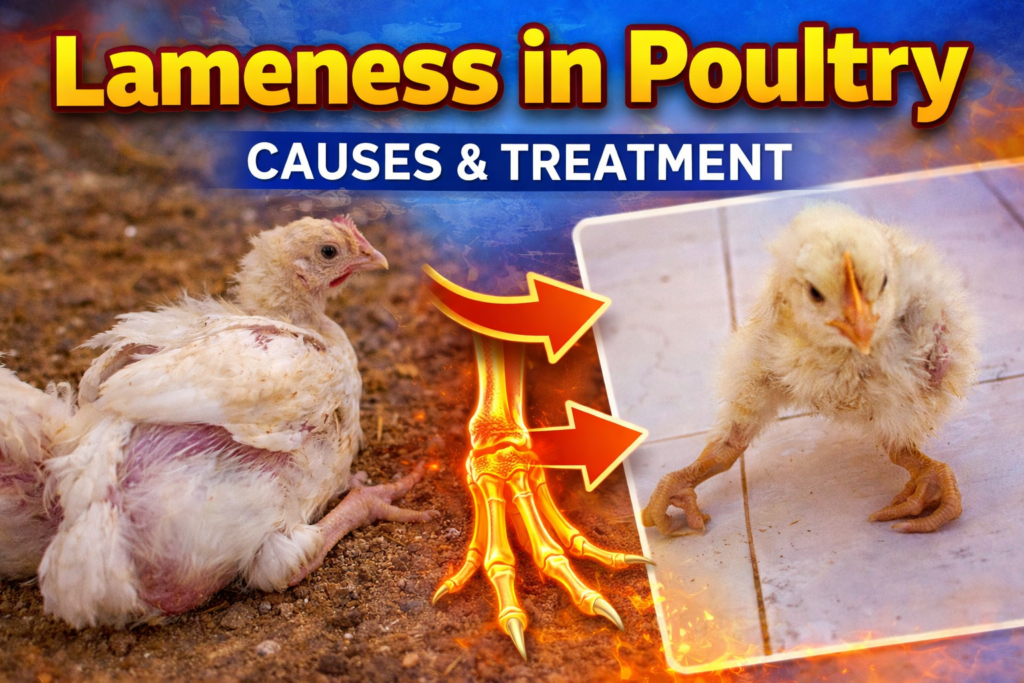
Lameness in poultry has quietly become one of the most widespread yet underestimated problems in modern poultry production. Whether it is lameness in broilers, lameness in chicks, lameness in layers, or even lameness in breeders, the core issue remains largely the same: the skeletal system of today’s birds is under far greater metabolic pressure than ever before.
Farmers often ask questions like “what causes lameness in poultry?”, “what causes lameness in chickens?” or “why are my birds sitting and not walking properly?”. In many cases, the immediate response is to suspect infection or injury. However, field experience and nutritional science consistently show that most locomotor problems in poultry are metabolic and nutritional in origin, not infectious.
Simply put, lameness is not a disease in itself; it is a symptom—a visible expression of deeper imbalances in bone development, mineral nutrition and metabolic stress.
Understanding Lameness in Poultry: More Than Just Weak Legs
Lameness in poultry refers to any condition where birds show difficulty in standing, walking or bearing weight. The condition may range from mild limping to severe cases where birds remain seated for most of the day, unable or unwilling to move. Common lameness in poultry symptoms include abnormal gait, birds preferring to sit, reduced feed and water intake, uneven growth in the flock and, in layers, a parallel decline in eggshell quality.
Hindi me samjhein, to lameness ka matlab sirf pair ka dard nahi hota. Ye ek signal hota hai ki bird ka body weight, metabolism aur bone strength ek dusre ke saath sync me nahi chal rahe.
The economic impact of lameness is significant. In broilers, it leads to poor weight gain, higher culling and increased mortality. In layers, it manifests as reduced egg production, thin shells and conditions like cage layer fatigue in poultry. In breeders, lameness in breeders affects mating ability, fertility and overall productive lifespan.
Why Lameness Is Increasing in Modern Poultry Systems
To understand the causes of lameness in broilers and other poultry categories, one must first understand how dramatically poultry genetics and production systems have changed.
Modern broilers grow at a speed that would have been biologically unimaginable just a few decades ago. A bird reaching over 2 kg in little more than five weeks places extraordinary demands on its skeletal system. Bones are living tissues that require time, nutrients and proper metabolic conditions to mineralize and strengthen. Muscle mass and body weight can increase rapidly, but bone mineral density has natural biological limits.
Yahan par sabse bada gap banta hai.
Body ka weight aage nikal jaata hai, par haddiyan us pace ko match nahi kar paati. Isi gap ka practical result hota hai lameness in broilers, especially towards the later growth phase.
In chicks, the problem starts even earlier. Lameness in chicks is often linked to poor early mineral nutrition, inadequate vitamin D status or imbalanced calcium-phosphorus supply during the first critical weeks of skeletal development. Once early bone development is compromised, birds rarely recover completely, no matter what is done later.
Bone Development and the Nutritional Foundation of Locomotion
Bone development in poultry is a highly coordinated process involving collagen matrix formation, mineral deposition and continuous remodeling. Calcium and phosphorus form the inorganic backbone of bones, but their effective utilization depends heavily on vitamin D and several trace minerals.
A common misconception among farmers is that adding more calcium alone will solve leg problems. In reality, calcium for poultry birds is effective only when it is properly absorbed, balanced with phosphorus and deposited into bone tissue. Without vitamin D, calcium absorption from the intestine remains inefficient. Without adequate phosphorus, calcium cannot form stable bone mineral. Without trace minerals, the bone matrix itself remains weak.
Simple bhaasha me, calcium sirf eent hai, par cement, design aur mazdoor na ho to makaan mazboot nahi ban sakta.
Nutritional Causes of Lameness in Broilers and Chicks
When discussing what causes lameness in chickens, nutrition almost always appears at the center of the problem. In broilers, rapid growth dramatically increases the requirement for calcium, phosphorus and vitamin D. Even short-term deficiencies or poor mineral availability can trigger skeletal weakness.
Phosphorus availability is particularly critical. Many poultry diets contain adequate total phosphorus, but much of it is bound in phytate form and poorly available to birds. This creates a situation where diets look balanced on paper but fail at the metabolic level.
Vitamin D plays a decisive role here. Without sufficient vitamin D, even high levels of dietary calcium and phosphorus cannot be efficiently absorbed. Birds may receive calcium tonics repeatedly, yet lameness persists because the problem is not supply but utilization.
Isi liye field me ye common complaint hoti hai:
“Doctor sahab, calcium dete hain phir bhi pair theek nahi ho rahe.”
Trace Minerals and Locomotor Stability
An often-ignored contributor to lameness in poultry is deficiency or imbalance of trace minerals such as zinc, manganese, copper and selenium. These minerals are not present in large quantities, but their biological importance is enormous.
Zinc and manganese are essential for cartilage formation and bone matrix strength. Deficiency can lead to conditions like perosis, angular bone deformities and joint instability. Copper plays a role in collagen cross-linking, giving tensile strength to bones and connective tissue. Selenium protects bone-forming cells from oxidative damage, especially under heat stress and high metabolic load.
Hindi me samjhein, trace minerals bone ke “micron level ke pillars” hote hain. Inki kami me bone dikhta to normal hai, par pressure padte hi fail ho jaata hai.
Lameness in Layers and Cage Layer Fatigue
In layers, lameness takes a slightly different but equally serious form. Lameness in layers is frequently linked to chronic calcium mobilization from bones for eggshell formation. Over time, this leads to weakened skeletal reserves and conditions such as cage layer fatigue in poultry.
Eggshell formation is one of the most calcium-intensive biological processes in poultry. When dietary calcium intake or absorption is insufficient, birds draw calcium from medullary bone. If this process continues unchecked, bones become fragile, leading to fractures, poor mobility and reduced welfare.
Here again, the issue is not merely calcium intake but balanced calcium nutrition supported by vitamin D and trace minerals, ensuring that dietary calcium is absorbed efficiently rather than continuously stripped from skeletal reserves.
Lameness in Breeders: A Silent Productivity Killer
Lamness in breeders is often overlooked because breeder birds are not marketed for meat. However, skeletal weakness in breeders has far-reaching consequences. Reduced mobility affects mating behavior, fertility and hatchability. Overweight breeders with inadequate bone strength are especially prone to locomotor problems.
In breeders, long-term skeletal health depends on sustained nutritional support rather than short corrective treatments. Early intervention and preventive nutrition are critical.
Treatment of Lameness in Broilers and Poultry: Why Prevention Works Better
When farmers search for lameness treatment in poultry or treatment of lameness in broilers, they often expect a quick therapeutic solution. Unfortunately, once structural bone damage has occurred, complete reversal is difficult.
Nutritional intervention works best when applied early. Correcting calcium, phosphorus and vitamin D levels, along with trace mineral and B-complex supplementation, can significantly improve outcomes if skeletal damage has not progressed too far.
Isliye ek baat hamesha yaad rakhiye:
Bone problem ka best treatment hai — timely nutritional correction.
Role of Calcium Supplementation in Managing Lameness
Calcium remains the cornerstone of skeletal nutrition. However, not all calcium products deliver the same results. Farmers frequently look for the best calcium supplements for poultry or search online for the best calcium tonic for poultry. The effectiveness of a calcium tonic depends on its formulation, bioavailability and accompanying nutrients.
An ideal calcium tonic for poultry should not only supply calcium but also ensure its absorption, metabolism and deposition into bones. This is where vitamin D, phosphorus, trace minerals and metabolic cofactors become indispensable.
Pyrocal-B as a Nutritional Tool for Prevention and Support
From a nutritional standpoint, Pyrocal-B fits into lameness management as a comprehensive calcium and skeletal support supplement, rather than a simple calcium source. Its formulation addresses multiple layers of the problem: mineral supply, absorption, bone matrix support and metabolic efficiency.
Used strategically, Pyrocal-B supports bone mineralization during rapid growth in broilers, strengthens skeletal reserves in layers to reduce cage layer fatigue, and helps maintain locomotor health in breeders under long-term production stress.
Pyrocal-B sirf calcium nahi deta, balki calcium ko sahi jagah, sahi time par kaam karne me madad karta hai.
As part of a balanced nutrition program, such supplementation helps reduce the incidence of lameness in poultry, improves bird mobility and supports overall performance without forcing unnatural growth.
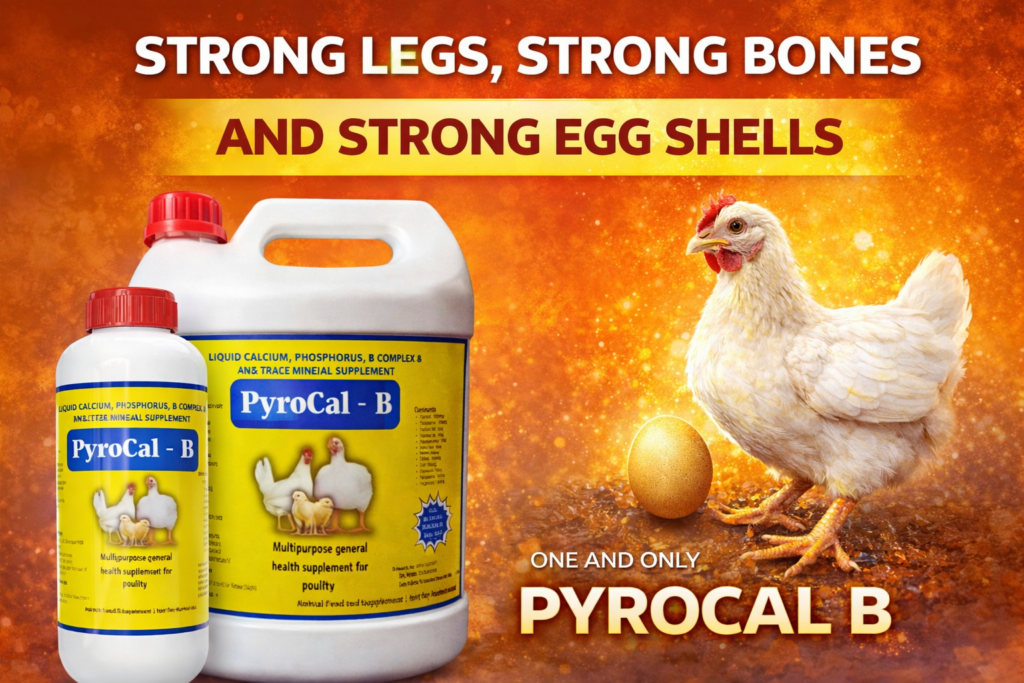
Buy Pyrocal B online click here
Conclusion
Lameness in poultry—whether in broilers, chicks, layers or breeders—is fundamentally a nutritional and metabolic challenge. Rapid genetic progress, high production stress and marginal deficiencies in calcium, phosphorus, vitamin D, trace minerals and B-complex vitamins collectively contribute to locomotor problems.
Understanding what causes lameness in poultry requires moving beyond surface symptoms and addressing the nutritional foundations of skeletal health. Prevention through balanced nutrition remains far more effective than attempting late-stage correction.
By focusing on mineral balance, vitamin support and metabolic efficiency, and by using well-designed calcium supplements such as Pyrocal-B where appropriate, poultry producers can significantly reduce lameness, improve welfare and protect long-term productivity.
1. Why do poultry birds develop leg weakness even when calcium tonic is regularly used?
This is one of the most common questions in poultry practice. The reason is simple: calcium supply alone does not guarantee bone strength. For calcium to work, it must be absorbed, balanced with phosphorus and deposited into bone tissue. In the absence of adequate vitamin D, trace minerals and proper metabolic support, much of the supplied calcium remains underutilized. Pyrocal-B is designed to address this utilization gap rather than just increasing calcium intake.
2. How is Pyrocal-B different from ordinary calcium tonics used in poultry?
Most ordinary calcium tonics focus only on supplying calcium. Pyrocal-B, on the other hand, is formulated as a bone, leg and eggshell support system. It combines calcium and phosphorus with vitamin D, B-complex vitamins, chromium and antioxidant trace minerals. This integrated approach ensures that calcium is not only supplied but also absorbed, metabolized and effectively used for bone formation and skeletal strength.
3. Can Pyrocal-B be considered the best calcium supplement for poultry?
A calcium supplement can be considered effective only if it improves bone strength and bird mobility, not just calcium levels in feed or water. Pyrocal-B focuses on functional outcomes such as stronger legs, reduced lameness and improved eggshell quality. This makes it more effective than conventional calcium supplements, especially in fast-growing broilers, high-producing layers and breeders under metabolic stress.
4. Is Pyrocal-B a growth promoter?
No. Pyrocal-B is not a growth promoter. It does not force unnatural weight gain. Its role is to support skeletal development so that birds can safely carry their genetically programmed body weight and production load. By improving bone strength and mineral utilization, Pyrocal-B indirectly supports healthy performance without pushing birds beyond their physiological limits.
5. How does Pyrocal-B help in lameness treatment in poultry?
Lameness treatment in poultry is most effective when addressed at an early stage. Pyrocal-B helps by correcting nutritional imbalances that contribute to weak bones and poor leg strength. It supports calcium and phosphorus deposition, improves vitamin D-dependent absorption and protects bone-forming cells through trace minerals. While advanced structural damage may not be fully reversible, early and timely use significantly improves recovery and reduces further progression.
6. Is Pyrocal-B useful for lameness in chicks?
Yes. Early skeletal development is critical in chicks. Nutritional deficiencies during the first few weeks can permanently compromise bone strength. Pyrocal-B provides balanced mineral and vitamin support during this sensitive phase, helping chicks develop a stronger skeletal foundation and reducing the risk of lameness later in life.
7. How does Pyrocal-B support eggshell quality in layers?
Eggshell formation requires large amounts of calcium, much of which is mobilized from the bird’s bones. If skeletal reserves are weak, eggshell quality deteriorates and conditions like cage layer fatigue develop. Pyrocal-B supports both dietary calcium utilization and bone reserve strength, ensuring consistent eggshell thickness while protecting skeletal health.
8. Can Pyrocal-B be used in breeders with locomotor problems?
Yes. In breeders, skeletal strength is essential for mobility, mating activity and long productive life. Pyrocal-B helps maintain bone density and joint stability under long-term production stress. Its balanced formulation makes it suitable for breeders where continuous skeletal support is more important than short-term correction.
9. When should Pyrocal-B be preferred over a normal calcium tonic?
Pyrocal-B should be preferred whenever there are signs of weak legs, birds sitting frequently, uneven growth, poor eggshell quality or post-stress weakness. It is particularly useful during rapid growth phases, high egg production, heat stress, vaccination stress and recovery after disease—situations where ordinary calcium tonics often fail to deliver results.
10. Can Pyrocal-B be used as a preventive calcium supplement in poultry?
Yes. Prevention is where Pyrocal-B performs best. Regular strategic use during critical growth and production phases helps maintain bone strength, reduce the incidence of lameness and support long-term performance. In simple terms, Pyrocal-B works better as a preventive nutritional tool than as a late corrective measure.
Pyrocal-B is not just a calcium tonic. It is a scientifically designed skeletal support solution that helps poultry birds walk better, grow safely and produce consistently.
If you are facing lamness problem consult now – whatsapp or call 9871584101