
हिंदी में सार: ब्रॉयलर में एसाइटिस (पेट में पानी) ज़्यादातर तेज़ बढ़त और ऑक्सीजन की कमी से होती है। फेफड़े छोटे होने के कारण खून पर दबाव बढ़ता है (pulmonary hypertension), दायाँ हृदय बड़ा होकर फेल हो जाता है, लिवर में खून रुकता है और पेट में तरल भर जाता है। ठंड, ऊँचाई, खराब वेंटिलेशन, ज़्यादा ऊर्जा वाला फीड, ज़्यादा नमक और साँस की बीमारी इसे बढ़ाते हैं। इसलिए बचाव में शेड का तापमान और हवा, शुरू की बढ़त पर नियंत्रण, फीड का संतुलन और साँस की बीमारी का जल्दी इलाज सबसे ज़रूरी है। पोस्टमार्टम में दाएँ हृदय का आकार और तरल का रंग देखकर दूसरे कारणों से अलग पहचानें।
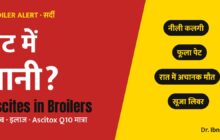
Ascites in broilers, also called pulmonary hypertension syndrome (PHS) or “water belly”, is mainly a problem of oxygen supply and demand. A modern broiler grows very fast, but its lungs and the capillary bed inside them do not expand in the same proportion. When oxygen demand rises, the heart has to push more blood through a lung that cannot take more, and the pressure in the pulmonary artery climbs. The sequence that follows explains most of what you see at necropsy.
From fast growth to fluid in the abdomen
- High oxygen demand. Rapid growth, high-energy feed and cold stress all raise the metabolic rate and oxygen need.
- Pulmonary hypertension. The avian lung is small and rigid with a limited capillary volume, so higher blood flow raises pulmonary arterial pressure.
- Right ventricular hypertrophy and dilatation. The right ventricle thickens, and its valve may begin to leak. A right ventricle to total ventricle weight ratio (RV:TV) above about 0.25 is generally taken as a sign of pulmonary hypertension.
- Right-sided heart failure. Blood backs up into the liver and veins, the liver becomes congested, and fluid leaks across the liver surface into the abdomen.
- Ascites. Straw-coloured fluid, often with fibrin clots, collects in the abdomen. The bird becomes cyanotic, breathes with effort, stops eating and dies.
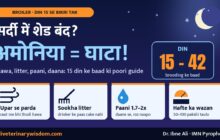
- Cold chicks or chilling in the first two weeks, and winter nights with curtains opened or closed at the wrong time.
- Poor ventilation: ammonia, dust, carbon monoxide from brooders, and low oxygen in a closed shed.
- High altitude, where oxygen is lower.
- High-energy, fast-growth feed and early rapid weight gain, especially in males.
- Too much sodium in feed or water, which increases blood volume.
- Respiratory disease (for example IB, CRD or aspergillosis) that reduces oxygen exchange.
- Certain toxins and mycotoxins that damage the heart or liver.
What to look for at necropsy
| Finding | What it points to |
|---|---|
| Clear to straw-coloured fluid, fibrin clots, dilated flabby right ventricle, congested liver | Typical PHS ascites (right heart failure) |
| Thick right ventricle wall, RV:TV above about 0.25, little or no fluid yet | Early pulmonary hypertension in the flock, a warning before losses start |
| Yellow, cloudy fluid, fibrinous coating over liver and gut | Bacterial peritonitis (for example E. coli), not PHS |
| Shrunken or pale liver with fluid, history of suspect feed | Primary liver damage or aflatoxicosis, test the feed |
| Fluid with heavy lung congestion, air-sac lesions, history of respiratory signs | Respiratory disease adding to the oxygen problem |
Open the heart in a few birds from each flock, not only the dead ones with fluid. If most show a thick right ventricle, the flock is under pulmonary pressure whether or not ascites has appeared yet.
A field prevention plan
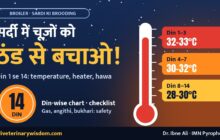
- Brooding temperature and ventilation. Keep chicks warm, and balance warmth with fresh air. A shed that is closed too tightly to save heat raises ammonia and lowers oxygen. Read our winter broiler management guide for curtain management.
- Control early growth. Where the problem is recurring, early feed or light programmes that slow growth in the first weeks reduce the load on the heart. Discuss the programme with your nutritionist so final weight and FCR are not affected more than the farm can accept.
- Feed balance. Keep sodium and salt within the recommended range for feed and for any water source. Avoid sudden changes in feed energy.
- Treat respiratory disease early. Any condition that damages lung or air sac function makes ascites worse.
- Antioxidant and metabolic support. Vitamin C, vitamin E and coenzyme Q10 have been studied for their role in reducing oxidative stress and supporting energy metabolism in the heart and lung. Results in the field vary, so treat them as support and not a replacement for the management steps above.
- Record and review. Note mortality by day, necropsy findings and shed conditions for each batch, and compare batches to find the common factor.
Ascites support
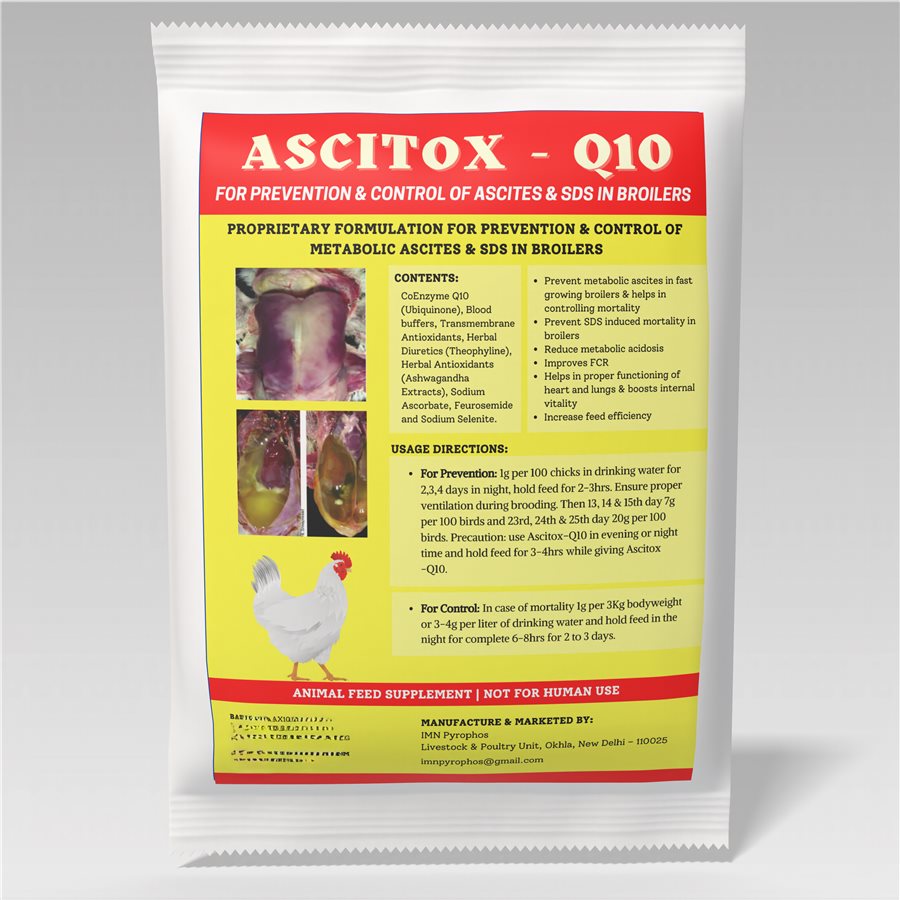
Ascitox Q10
A supportive supplement for the prevention and control of metabolic ascites and SDS in broilers. Contains coenzyme Q10, blood buffers, antioxidants, herbal diuretics, sodium ascorbate and selenite. It is given alongside, not in place of, good shed management.
Dose (label): prevention: 1 g per 100 chicks on day 2–4 at night (hold feed for 2–3 hours), 7 g per 100 birds on day 13–15, and 20 g per 100 birds on day 23–25, given in the evening or at night. Control: 1 g per 3 kg body weight or 3–4 g per litre, with feed held at night for 6–8 hours, for 2–3 days.
1 kg ₹698MRP ₹1,080
Further reading: Swayne DE (ed.), Diseases of Poultry, 14th ed., sections on cardiovascular and metabolic disorders; reviews on pulmonary hypertension syndrome and ascites in broilers in Poultry Science and the World’s Poultry Science Journal.
More from the corner: Vets Technical Corner home · Immunosuppression in broilers · Ascitox-Q10 field study