
Poultry Equipment Requirements – Practical Size-Wise Guide for Indian Farms
The selection and quantity of poultry equipment must always be planned according to farm size, bird capacity, and farming system. Using either insufficient or oversized equipment leads to uneven growth, feed wastage, wet litter problems, and increased disease risk. Below is a practical equipment guide based on farm size, commonly followed in Indian poultry farming.
Poultry Equipment for Small-Scale Farms (100–500 Birds)
In small poultry farms, the focus should be on low-cost, easy-to-handle equipment that ensures proper feeding, watering, and temperature control without heavy investment.
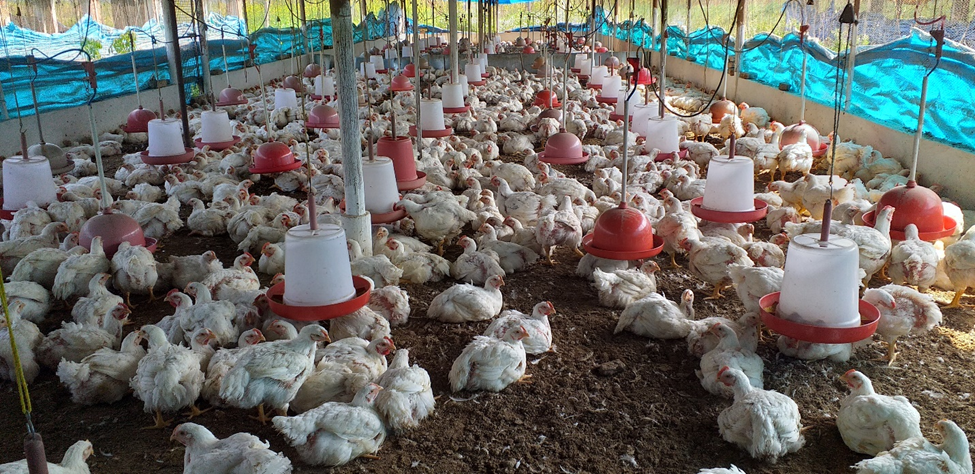
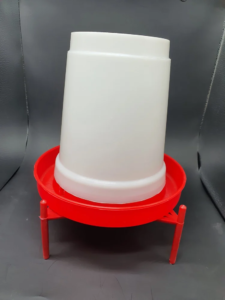
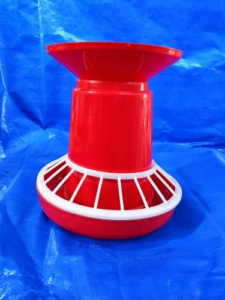
For 100 to 500 birds, one gas or electric brooder is sufficient to provide uniform heat during the first 2–3 weeks. Chick feeders should be provided at the rate of one feeder for every 50 chicks during brooding, gradually reducing to one feeder for 30–35 adult birds. Drinkers should be placed at a ratio of one drinker per 50 birds to ensure continuous access to clean water.
Water storage of 200–300 liters per day is usually adequate for this farm size. Simple exhaust fans or natural cross-ventilation are enough for temperature control. Lighting can be managed using LED bulbs of 7–9 watts placed uniformly inside the shed. Manual cleaning tools and basic disinfectant sprayers are sufficient for hygiene management.
Small farms should avoid over-investment in automation and focus more on correct placement and regular cleaning of equipment.
Poultry Equipment for Medium-Scale Farms (1,000–5,000 Birds)
Medium-scale farms require better efficiency, durability, and partial automation to manage higher bird density and reduce labor dependency.
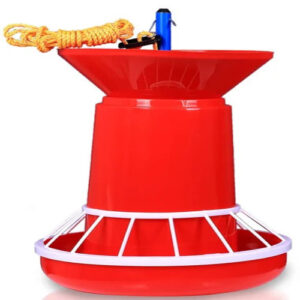
For brooding, gas brooders or automatic brooders with proper temperature sensors are recommended. Feeding systems should include round or pan feeders, with one feeder per 40–45 birds. Nipple or bell drinker systems are strongly recommended at this scale to prevent water wastage and wet litter problems.
Daily water requirement ranges between 1,000–2,000 liters depending on season. Overhead water tanks with filtration units are essential. Exhaust fans, foggers, and air inlets help control heat stress during summer. Lighting systems should be planned scientifically to ensure uniform light intensity across the shed.
A generator or inverter becomes mandatory at this stage to avoid losses during power cuts. Digital weighing scales should be used weekly to monitor growth performance and feed efficiency.
Essential and Useful Poultry Equipment for Poultry & Broiler Farming
Poultry equipment forms the backbone of efficient broiler farming. Proper selection and correct use of equipment directly influence chick comfort, feed efficiency, growth rate, labor requirement, and overall farm profitability. In Indian broiler farming conditions, equipment can broadly be classified into two categories: essential equipment and useful equipment. Understanding this classification helps farmers prioritize investment and gradually upgrade their farm operations without unnecessary expenditure.
Essential Poultry Equipment for Broiler Farming
Essential equipment includes all those items without which broiler farming cannot be successfully operated. These equipment are required on a daily basis and play a direct role in feeding, watering, brooding, temperature control, and basic farm management.
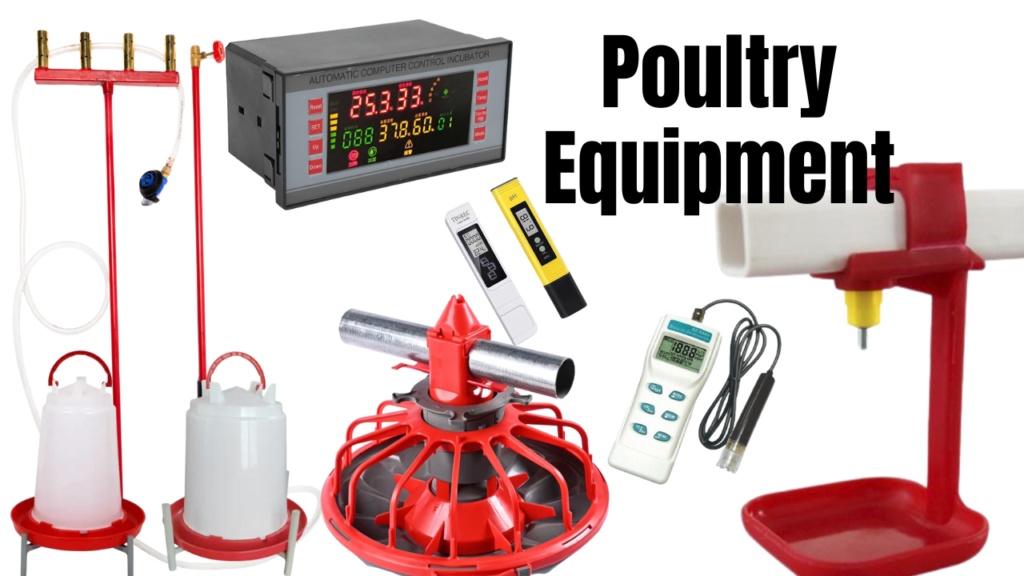
Feeders and drinkers are the most critical equipment, as uniform feed and water availability determines growth rate and flock uniformity. Properly sized feeders and drinkers reduce wastage and prevent overcrowding. Water tanks ensure uninterrupted clean water supply, while buckets and mugs are commonly used for medicine administration, vaccination preparation, and routine cleaning activities.
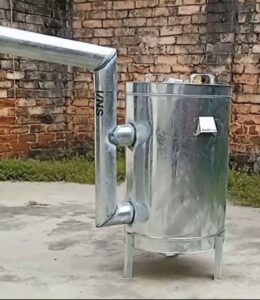
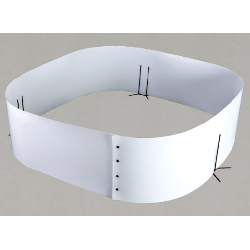
Brooding-related equipment such as brooder guards, brooder canopies, and brooders (gas, electric, or traditional bukhari systems) are essential during the early life of chicks. These items help maintain correct brooding temperature, protect chicks from chilling, and ensure uniform heat distribution. Poultry fans and curtains are necessary for ventilation control, especially in open-shed systems commonly used in India.
Digital thermometers are indispensable for monitoring shed temperature during brooding and extreme weather conditions. Ropes are widely used for curtain operation and shed management, while sprinklers help control heat stress during summer months. A weighing scale is essential for regular body weight monitoring, performance evaluation, and timely marketing decisions.
Without proper essential equipment, even high-quality chicks and feed cannot deliver expected results.
Useful Poultry Equipment for Improving Farming Efficiency
Useful equipment are those tools that are not mandatory for basic operations but significantly improve farm efficiency, hygiene, disease control, and management precision. These equipment become increasingly important as farm size increases or disease pressure rises.
Flame guns are widely used for effective disinfection of shed floors, cracks, and equipment, especially during downtime between flocks. Thermal foggers help in uniform distribution of disinfectants and insecticides inside the poultry shed, improving biosecurity and reducing pathogen load.
Moisture meters are useful for monitoring litter moisture levels, helping prevent coccidiosis and ammonia-related problems. Infrared thermometers allow quick, non-contact temperature measurement of floors, walls, and bird body surface, improving brooding accuracy.
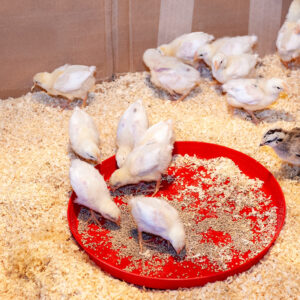
Chick trays are helpful during the first few days to encourage early feed intake and reduce chick stress. Foggers and sprinklers improve environmental comfort during hot weather and help control dust levels inside sheds.
Water quality monitoring equipment such as pH meters, TDS meters, and ORP meters are increasingly being adopted in Indian poultry farms. These instruments help farmers ensure safe drinking water quality, improve gut health, enhance vaccine efficacy, and reduce water-borne disease risks.
While these equipment are classified as useful rather than essential, their proper use can significantly reduce mortality, medicine cost, and management stress, especially in medium and large broiler farms.
Importance of Proper Equipment Planning in Broiler Farming
Successful broiler farming does not depend on having more equipment, but on having the right equipment in the right quantity and using it correctly. Many farms suffer losses due to improper equipment selection, poor placement, or lack of maintenance rather than disease alone. Gradual upgradation from essential to useful equipment, based on farm size and experience, is the most practical approach for Indian poultry farmers.
At Ali Veterinary Wisdom, we guide farmers in selecting and using poultry equipment scientifically, ensuring maximum efficiency with minimum investment.
Poultry Equipment for Commercial Farms (10,000+ Birds)
Commercial poultry farms require fully planned and scientifically integrated equipment systems to maintain production efficiency and biosecurity.
Environment-controlled sheds use automated feeding lines, nipple drinking systems, tunnel ventilation, cooling pads, and foggers. Feeding systems are designed to deliver uniform feed to thousands of birds simultaneously with minimal wastage. Drinking systems maintain constant water pressure and hygiene through filters and sanitizers.
Water storage capacity must be planned for at least one full day of consumption, often exceeding 10,000 liters. High-capacity exhaust fans, temperature controllers, and alarm systems are installed to protect birds from sudden environmental stress.
Power backup systems with automatic generators are compulsory. Advanced biosecurity equipment such as vehicle disinfectant tunnels, footbath stations, and restricted entry systems are standard practices in commercial farms.
Equipment Space Planning and Placement (Very Important)
Equipment placement is as important as equipment selection. Feeders and drinkers should always be placed at bird back height to reduce wastage. Brooders must be positioned to ensure uniform heat distribution. Improper spacing or clustering of equipment leads to bird crowding, uneven growth, and increased mortality.
In Indian open-shed systems, special attention should be given to ventilation direction, summer heat stress, and monsoon humidity while placing fans, foggers, and drinkers.
Common Equipment-Related Mistakes in Poultry Farms
Many poultry farms suffer losses due to improper equipment planning rather than disease. Using too few feeders results in uneven growth. Oversized drinkers cause water spillage and wet litter. Poor-quality equipment breaks frequently and increases maintenance cost. Ignoring equipment cleaning leads to bacterial contamination and digestive problems.
Investing in the right size and correct quality equipment saves money in the long run and improves overall farm performance.
Poultry Equipment Planning Support from Ali Veterinary Wisdom
At Ali Veterinary Wisdom, we provide practical, size-based poultry equipment planning according to bird capacity, climate, and farm layout. Our expert guidance helps farmers select cost-effective equipment, optimize placement, and avoid unnecessary investment. With proper equipment planning, poultry farmers can significantly improve growth rate, reduce disease risk, and increase overall profitability.
Need Equipment Planning Support?
WhatsApp / Call: +91-9871584101