
Brazil’s crop agency Conab expects a record 181.6 million tonnes of soybeans and a record 148.0 million tonnes of corn in the 2026/27 season. The forecast was released on 15 October 2026 and reported on 30 October. Brazil is the world’s biggest soybean exporter, so a big crop there matters to every feed buyer, including Indian poultry and dairy farmers who rely on soybean meal for protein.
Key facts
| Item | Detail (Conab, 15 Oct 2026) |
|---|---|
| Soybean production 2026/27 | Record 181.6 million tonnes |
| Soybean area | 49.3 million hectares, up 1.4%, the smallest rise in 20 years |
| Soybean yield | Expected to fall about 0.8% |
| Corn production 2026/27 | Record 148.0 million tonnes |
| Corn area | 23.7 million hectares, up 4.9% |
| First-crop corn area | 4.54 million hectares, up 10.7% |
| China bookings | 9.04 million tonnes of Brazil’s 2026/27 soybeans (Rio Times) |
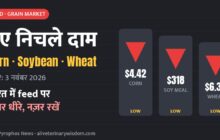
| Chicago soybean meal, 3 Nov | $318.00 per short ton, a 2.5-month low (Pro Farmer) |
These are forecasts. The Brazilian crop is still being planted and will be harvested early next year.
Why a record is expected
The record comes from area, not yield. Conab says soybean area is growing at the slowest rate in 20 years, because producers have narrower margins after several years of softer world prices, and yield is expected to slip about 0.8% against last season’s unusually high yields. Even so, the total is a record. Corn area rises faster, by 4.9%, and first-crop corn area by 10.7%, because producers expect better domestic prices in the second half of 2026 and possibly stronger export demand.
The market has been reacting. On 3 November, Chicago soybean meal fell to a 2.5-month low of $318.00 per short ton, as harvest selling met a large expected South American crop. The demand side is uncertain too: Rio Times reports that Chinese buyers have booked 9.04 million tonnes of Brazilian beans, while US purchases are held back by large stocks and thin crushing margins.
What it means for Indian farmers
Soybean meal is the main protein in broiler and layer rations and an important protein source in dairy concentrate. A big South American crop tends to keep world meal prices soft, and that limits how far Indian meal can rise before feed mills look at alternatives. It also makes Indian soymeal exports harder when our rates are higher than world rates.
But Indian rates are set locally. They follow our own soybean crop, crushing, the soy oil market and demand, and imports of genetically modified meal are tightly controlled. So a record crop in Brazil is a cushion, not a guarantee of cheaper feed. The Brazilian crop is also months from harvest, and weather in South America can still change the picture. We are giving our reading of the effect, not a price forecast.
Corn is the other side. A record Brazilian corn crop adds to world supply too, but Indian maize prices are driven more by our harvest and ethanol demand than by Brazil.
What farmers should do now
- Watch soybean meal and DOC rates in your district for a few weeks before booking large quantities.
- Buy feed in small, regular lots so you can adjust if the rate moves either way.
- Keep protein level right. Cutting protein to save money lowers growth, egg output and milk. Cheaper protein is a chance to feed correctly, not to under-feed.
- Test or ask for a lab report on protein and moisture for meal lots, since adulteration can erase any price gain.
- Dairy farmers: compare cottonseed cake, mustard cake and soy-based concentrate prices and pick the best protein per rupee.
- Record your feed cost per kg of weight gain or per litre of milk every month.
- Follow credible updates from your feed supplier or poultry association instead of rumours on messaging groups.
Frequently asked questions
Will soybean meal become cheaper in India?
It may get less pressure to rise, but Indian rates depend on our own crop, crushing and demand, so a fall is not guaranteed.
Is Brazil’s record crop confirmed?
No. 181.6 million tonnes is Conab’s forecast from 15 October 2026. The crop is still to be grown and harvested.
Why is soybean area growing so slowly?
Conab links it to narrower producer margins after several years of softer world prices.
Source: Global Agriculture, 30 Oct 2026, citing Conab, with market data from Pro Farmer and Rio Times, 3 Nov 2026. Written by the IMN Pyrophos team in our own words.
ब्राज़ील की फ़सल एजेंसी Conab को 2026/27 सीज़न में रिकॉर्ड 181.6 मिलियन टन soybean और रिकॉर्ड 148.0 मिलियन टन मक्के की उम्मीद है। यह अनुमान 15 अक्टूबर 2026 को जारी हुआ और 30 अक्टूबर को रिपोर्ट हुआ। ब्राज़ील दुनिया का सबसे बड़ा soybean निर्यातक है, इसलिए वहाँ की बड़ी फ़सल हर feed खरीदार के लिए मायने रखती है, जिनमें प्रोटीन के लिए soybean meal पर निर्भर भारत के पोल्ट्री और डेयरी किसान भी शामिल हैं।
मुख्य तथ्य
| बात | विवरण (Conab, 15 अक्टूबर 2026) |
|---|---|
| 2026/27 soybean उत्पादन | रिकॉर्ड 181.6 मिलियन टन |
| Soybean रकबा | 49.3 मिलियन हेक्टेयर, 1.4% ज़्यादा, 20 साल की सबसे छोटी बढ़त |
| Soybean उपज | करीब 0.8% घटने का अनुमान |
| 2026/27 मक्का उत्पादन | रिकॉर्ड 148.0 मिलियन टन |
| मक्का रकबा | 23.7 मिलियन हेक्टेयर, 4.9% ज़्यादा |
| पहली फ़सल का मक्का रकबा | 4.54 मिलियन हेक्टेयर, 10.7% ज़्यादा |
| चीन की बुकिंग | ब्राज़ील के 2026/27 soybean के 9.04 मिलियन टन (Rio Times) |
| Chicago soybean meal, 3 नवंबर | $318.00 प्रति short ton, ढाई महीने का निचला स्तर (Pro Farmer) |
ये अनुमान हैं। ब्राज़ील की फ़सल की बुवाई अभी चल रही है और कटाई अगले साल की शुरुआत में होगी।
रिकॉर्ड की उम्मीद क्यों है
रिकॉर्ड रकबे से आ रहा है, उपज से नहीं। Conab के मुताबिक soybean का रकबा 20 साल की सबसे धीमी रफ़्तार से बढ़ रहा है, क्योंकि कई साल के कमज़ोर विश्व दामों के बाद उत्पादकों का margin सिकुड़ा है, और पिछले सीज़न की असामान्य रूप से ऊँची उपज के मुकाबले उपज करीब 0.8% फिसलने का अनुमान है। फिर भी कुल उत्पादन रिकॉर्ड है। मक्के का रकबा 4.9% और पहली फ़सल का रकबा 10.7% बढ़ रहा है, क्योंकि उत्पादक 2026 की दूसरी छमाही में बेहतर घरेलू दाम और संभवतः मज़बूत निर्यात माँग की उम्मीद कर रहे हैं।
बाज़ार असर दिखा रहा है। 3 नवंबर को Chicago soybean meal $318.00 प्रति short ton के ढाई महीने के निचले स्तर पर आया, जब harvest की बिकवाली और दक्षिण अमेरिका की बड़ी अपेक्षित फ़सल मिले। माँग की तरफ़ भी अनिश्चितता है: Rio Times के मुताबिक चीनी खरीदार 9.04 मिलियन टन ब्राज़ीली soybean बुक कर चुके हैं, जबकि अमेरिकी खरीद बड़े stock और कमज़ोर crushing margin से रुकी है।
भारतीय किसानों के लिए मतलब
Soybean meal ब्रॉयलर और लेयर ration का मुख्य प्रोटीन है और डेयरी concentrate में भी अहम प्रोटीन स्रोत है। दक्षिण अमेरिका की बड़ी फ़सल से दुनिया में meal के दाम नरम रहते हैं, जिससे भारतीय meal कितना चढ़ सकता है, इसकी सीमा बनती है, क्योंकि feed mill विकल्प देखने लगते हैं। हमारे दाम विश्व दामों से ऊँचे हों तो भारतीय soymeal का निर्यात भी मुश्किल होता है।
पर भारतीय भाव स्थानीय रूप से तय होते हैं। वे हमारी soybean फ़सल, crushing, सोया तेल बाज़ार और माँग के हिसाब से चलते हैं, और genetically modified meal का आयात कड़ाई से नियंत्रित है। इसलिए ब्राज़ील की रिकॉर्ड फ़सल एक गद्दी है, सस्ते feed की गारंटी नहीं। ब्राज़ीली फ़सल की कटाई में अभी महीनों हैं और दक्षिण अमेरिका का मौसम तस्वीर बदल सकता है। हम असर का अपना आकलन दे रहे हैं, दाम का पूर्वानुमान नहीं।
मक्के की तरफ़ देखें तो ब्राज़ील की रिकॉर्ड मक्का फ़सल भी विश्व सप्लाई बढ़ाती है, पर भारत के मक्के के दाम ब्राज़ील से ज़्यादा हमारी फ़सल और ethanol माँग से चलते हैं।
किसान अभी क्या करें
- Soybean meal और DOC के भाव अपने ज़िले में कुछ हफ़्ते देखें, फिर बड़ी मात्रा बुक करें।
- Feed छोटी, नियमित खेपों में खरीदें ताकि भाव किसी भी तरफ़ बदले तो समायोजन कर सकें।
- प्रोटीन का स्तर सही रखें। बचत के लिए प्रोटीन घटाने से बढ़वार, अंडे और दूध घटते हैं। सस्ता प्रोटीन सही खिलाने का मौका है, कम खिलाने का नहीं।
- प्रोटीन और नमी की जाँच या lab report माँगें, क्योंकि मिलावट दाम की हर बचत मिटा सकती है।
- डेयरी किसान: बिनौला खली, सरसों खली और soy आधारित concentrate के भाव मिलाएँ और प्रति रुपया सबसे अच्छा प्रोटीन चुनें।
- हर महीने प्रति किलो वज़न बढ़त या प्रति लीटर दूध की feed लागत दर्ज करें।
- भरोसेमंद अपडेट अपने feed supplier या पोल्ट्री संगठन से लें, मैसेज ग्रुप की अफ़वाहों से नहीं।
अक्सर पूछे जाने वाले सवाल
क्या भारत में soybean meal सस्ता होगा?
बढ़ने का दबाव कम रह सकता है, पर भारतीय भाव हमारी फ़सल, crushing और माँग पर निर्भर हैं, इसलिए गिरावट की गारंटी नहीं।
क्या ब्राज़ील की रिकॉर्ड फ़सल पक्की है?
नहीं। 181.6 मिलियन टन Conab का 15 अक्टूबर 2026 का अनुमान है। फ़सल अभी उगनी और कटनी बाकी है।
Soybean का रकबा इतना धीमे क्यों बढ़ रहा है?
Conab इसे कई साल के कमज़ोर विश्व दामों के बाद उत्पादकों के सिकुड़े margin से जोड़ता है।
Source: Global Agriculture, 30 अक्टूबर 2026 (Conab का हवाला); बाज़ार आँकड़े Pro Farmer और Rio Times, 3 नवंबर 2026। IMN Pyrophos टीम ने अपने शब्दों में लिखा।
Brazil ki fasal agency Conab ko 2026/27 season me record 181.6 million ton soybean aur record 148.0 million ton makke ki ummeed hai. Yeh anumaan 15 October 2026 ko jaari hua aur 30 October ko report hua. Brazil duniya ka sabse bada soybean niryatak hai, isliye wahan ki badi fasal har feed kharidaar ke liye maayne rakhti hai, jinme protein ke liye soybean meal par nirbhar Bharat ke poultry aur dairy kisan bhi shamil hain.
Mukhya tathya
| Baat | Vivaran (Conab, 15 October 2026) |
|---|---|
| 2026/27 soybean utpadan | Record 181.6 million ton |
| Soybean rakba | 49.3 million hectare, 1.4% zyada, 20 saal ki sabse chhoti badhat |
| Soybean upaj | Lagbhag 0.8% ghatne ka anumaan |
| 2026/27 makka utpadan | Record 148.0 million ton |
| Makka rakba | 23.7 million hectare, 4.9% zyada |
| Pehli fasal ka makka rakba | 4.54 million hectare, 10.7% zyada |
| China ki booking | Brazil ke 2026/27 soybean ke 9.04 million ton (Rio Times) |
| Chicago soybean meal, 3 November | $318.00 prati short ton, dhai mahine ka nichla star (Pro Farmer) |
Ye anumaan hain. Brazil ki fasal ki buwai abhi chal rahi hai aur katai agle saal ki shuruaat me hogi.
Record ki ummeed kyon hai
Record rakbe se aa raha hai, upaj se nahi. Conab ke mutabik soybean ka rakba 20 saal ki sabse dheemi raftar se badh raha hai, kyonki kai saal ke kamzor vishwa daamon ke baad utpadakon ka margin sikuda hai, aur pichhle season ki asaamanya roop se oonchi upaj ke muqable upaj lagbhag 0.8% phisalne ka anumaan hai. Phir bhi kul utpadan record hai. Makke ka rakba 4.9% aur pehli fasal ka rakba 10.7% badh raha hai, kyonki utpadak 2026 ki doosri chhamahi me behtar gharelu daam aur sambhavtah majboot niryat maang ki ummeed kar rahe hain.
Bazaar asar dikha raha hai. 3 November ko Chicago soybean meal $318.00 prati short ton ke dhai mahine ke nichle star par aaya, jab harvest ki bikwali aur South America ki badi apekshit fasal mile. Maang ki taraf bhi anishchitata hai: Rio Times ke mutabik Chini kharidaar 9.04 million ton Brazili soybean book kar chuke hain, jabki American kharid bade stock aur kamzor crushing margin se ruki hai.
Bharatiya kisanon ke liye matlab
Soybean meal broiler aur layer ration ka mukhya protein hai aur dairy concentrate me bhi ahm protein srot hai. South America ki badi fasal se duniya me meal ke daam narm rehte hain, jisse Bharatiya meal kitna chadh sakta hai, iski seema banti hai, kyonki feed mill vikalp dekhne lagte hain. Hamare daam vishwa daamon se oonche hon to Bharatiya soymeal ka niryat bhi mushkil hota hai.
Par Bharatiya bhaav sthaniya roop se tay hote hain. Ve hamari soybean fasal, crushing, soya tel bazaar aur maang ke hisaab se chalte hain, aur genetically modified meal ka aayat kadai se niyantrit hai. Isliye Brazil ki record fasal ek gaddi hai, sasta feed ki guarantee nahi. Brazili fasal ki katai me abhi mahine hain aur South America ka mausam tasveer badal sakta hai. Hum asar ka apna aakalan de rahe hain, daam ka poorvanumaan nahi.
Makke ki taraf dekhein to Brazil ki record makka fasal bhi vishwa supply badhati hai, par Bharat ke makke ke daam Brazil se zyada hamari fasal aur ethanol maang se chalte hain.
Kisan abhi kya karein
- Soybean meal aur DOC ke bhaav apne zile me kuch hafte dekhein, phir badi matra book karein.
- Feed chhoti, niyamit khepon me kharidein taaki bhaav kisi bhi taraf badle to samayojan kar sakein.
- Protein ka star sahi rakhein. Bachat ke liye protein ghatane se badhwar, ande aur doodh ghatte hain. Sasta protein sahi khilane ka mauka hai, kam khilane ka nahi.
- Protein aur nami ki jaanch ya lab report maangein, kyonki milawat daam ki har bachat mita sakti hai.
- Dairy kisan: binola khali, sarson khali aur soy aadharit concentrate ke bhaav milayein aur prati rupaya sabse achha protein chunein.
- Har mahine prati kilo wazan badhat ya prati litre doodh ki feed laagat darj karein.
- Bharosemand update apne feed supplier ya poultry sangathan se lein, message group ki afwahon se nahi.
Aksar poochhe jaane wale sawal
Kya Bharat me soybean meal sasta hoga?
Badhne ka dabav kam reh sakta hai, par Bharatiya bhaav hamari fasal, crushing aur maang par nirbhar hain, isliye giraavat ki guarantee nahi.
Kya Brazil ki record fasal pakki hai?
Nahi. 181.6 million ton Conab ka 15 October 2026 ka anumaan hai. Fasal abhi ugni aur katni baaki hai.
Soybean ka rakba itna dheeme kyon badh raha hai?
Conab ise kai saal ke kamzor vishwa daamon ke baad utpadakon ke sikude margin se jodta hai.
Source: Global Agriculture, 30 October 2026 (Conab ka hawala); bazaar aankde Pro Farmer aur Rio Times, 3 November 2026. IMN Pyrophos team ne apne shabdon me likha.