A woman from Salya village in the Ukhimath block of Rudraprayag district, Uttarakhand, has started her own poultry unit to support her family’s income. Amar Ujala reported on 16 October 2026 that Pooja Devi was selected for an individual enterprise under the Gramotthan Pariyojana (Gramotthan Project). She put together the money from three sources: ₹30,000 from the project, a ₹50,000 bank loan and ₹20,000 of her own. With this she bought hens and set up the business, and she is now working to grow her earnings from it.
Key facts
| Item | What the report says |
|---|---|
| Farmer | Pooja Devi, Salya village, Ukhimath block, Rudraprayag district, Uttarakhand |
| Enterprise | Poultry farming (she bought hens), as self-employment |
| Scheme | Gramotthan Pariyojana, selected for an individual enterprise |
| Project amount | ₹30,000 |
| Bank loan | ₹50,000 |
| Her own share | ₹20,000 |
| Total set-up money | ₹1,00,000 (adding the three amounts above) |
| Report date | 16 October 2026 |
The report does not give the number of birds, the type of birds or any income figure, so we do not guess them here.
Why this matters in the hills
In hill districts like Rudraprayag, farm holdings are small and many families depend on seasonal work or money sent home by migrants. A small poultry unit can be run from home, needs little land, and brings in cash through the year from eggs or live birds. Local demand in hill towns and along pilgrim routes is often met by birds and eggs brought up from the plains, so a nearby producer can have a real market.
The Gramotthan Pariyojana is Uttarakhand’s rural enterprise project, known in English as REAP (Rural Enterprise Acceleration Project). It helps rural households, especially women and members of self-help groups, start small businesses. Pooja Devi’s case shows a common model: part of the cost comes from the project, a bank loan covers the largest share, and the beneficiary puts in some money of her own. That mix spreads the risk and gives the farmer a stake in making the unit work.
What it means for small poultry farmers
- Financing is possible: you do not need to raise the full amount yourself. Project support plus a bank loan can cover most of a small unit.
- The loan must be repaid: plan your monthly sales so that loan instalments are covered even in a slow month.
- Cold is the big risk in the hills: young chicks lose heat fast in winter nights, and chilled chicks die or grow poorly. Brooding (keeping chicks warm) is the most important job in the first weeks.
- Feed and chicks often come from far: transport adds cost and stress, so plan supply in advance.
Starting a small poultry unit: what to do now
- Talk to the right office first. Contact your block office or the Gramotthan project staff in your district, and your local self-help group, to ask about eligibility and how to apply. Ask the animal husbandry department about training.
- Make a simple project plan for the bank. Write down shed cost, chicks, feed, medicines, expected sales and how you will repay. Banks find a clear plan easier to approve.
- Build a warm, dry shed. Use a raised or well-drained floor, dry litter, and curtains you can close at night. Keep ventilation so ammonia does not build up, but block cold drafts at bird level.
- Plan winter brooding. Have a heat source (bulb, brooder or heater) and a brooder guard ready before chicks arrive. Watch the chicks: huddled under the heat means too cold, spread far away means too hot.
- Vaccinate through your local vet. Follow the schedule your veterinary hospital gives for Ranikhet (ND), Gumboro and other diseases common in your area, and keep a record.
- Follow basic biosecurity. Limit visitors, use a foot dip at the shed door, keep wild birds and dogs out, and keep sick birds apart.
- Find buyers before you buy birds. Line up local shops, hotels, dhabas and households so you can sell steadily and repay the loan on time.
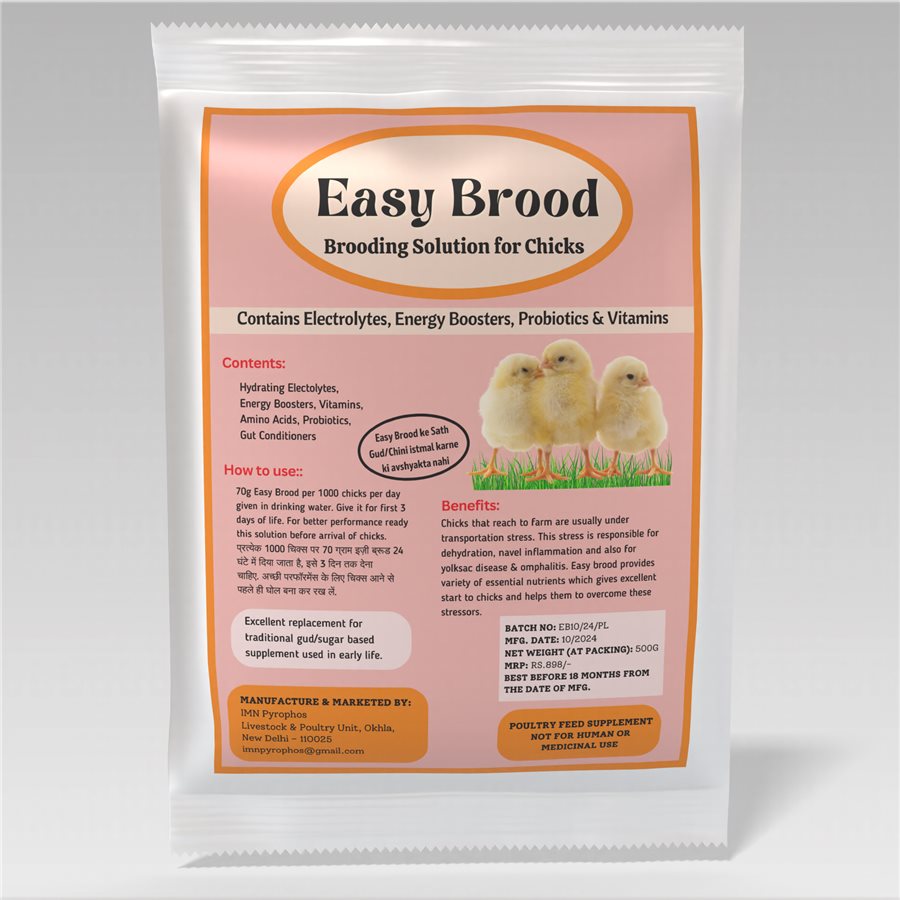
First 3 days · in place of jaggery water
Easy Brood
Start-up solution for chicks with electrolytes, osmolytes, glucose for energy, vitamin C and B vitamins, betaine, glycine and probiotics. Reduces transport stress and dehydration, helps early navel healing, and lowers the chance of yolk sac infection and early mortality. No need for jaggery, sugar or salt solutions. Antibiotic free. Also in 250 g (₹295).
Dose: 3–4 g per litre of drinking water for the first 72 hours, which is 50–70 g per 1000 chicks per day. Prepare the solution before the chicks arrive.
500 g ₹565MRP ₹898
FAQ
How did Pooja Devi fund her poultry unit?
According to the report, she got ₹30,000 from the Gramotthan Project, took a ₹50,000 bank loan and added ₹20,000 of her own money.
How can I apply for Gramotthan Project support?
Ask at your block office, the district project unit or your self-help group. They can tell you the current rules, documents and how bank linkage works.
Can poultry be done in cold hill areas?
Yes, with a warm, draft-free shed and good brooding in the first weeks. Most early losses in the hills come from cold, so prepare the heat source before chicks arrive.
Source: Amar Ujala (Hindi), 16 Oct 2026. Written by the IMN Pyrophos team in our own words.
रुद्रप्रयाग में मुर्गी पालन: ग्रामोत्थान परियोजना की मदद से महिला ने शुरू की यूनिट (अक्टूबर 2026)
उत्तराखंड के रुद्रप्रयाग ज़िले के ऊखीमठ ब्लॉक के सल्या गाँव की एक महिला ने परिवार की आमदनी बढ़ाने के लिए अपनी मुर्गी पालन यूनिट शुरू की है। अमर उजाला की 16 अक्टूबर 2026 की रिपोर्ट के अनुसार पूजा देवी को ग्रामोत्थान परियोजना के तहत व्यक्तिगत उद्यम के लिए चुना गया। उन्होंने पैसा तीन जगह से जुटाया: परियोजना से ₹30,000, बैंक से ₹50,000 का कर्ज़ और ₹20,000 अपनी जेब से। इसी से उन्होंने मुर्गियाँ खरीदकर काम शुरू किया, और अब वे इससे अपनी कमाई बढ़ाने में लगी हैं।
मुख्य बातें
| बात | रिपोर्ट क्या कहती है |
|---|---|
| किसान | पूजा देवी, सल्या गाँव, ऊखीमठ ब्लॉक, रुद्रप्रयाग ज़िला, उत्तराखंड |
| काम | मुर्गी पालन (मुर्गियाँ खरीदीं), स्वरोज़गार के रूप में |
| योजना | ग्रामोत्थान परियोजना, व्यक्तिगत उद्यम के लिए चयन |
| परियोजना से राशि | ₹30,000 |
| बैंक कर्ज़ | ₹50,000 |
| अपना हिस्सा | ₹20,000 |
| कुल लागत | ₹1,00,000 (ऊपर की तीनों रकम जोड़कर) |
| रिपोर्ट की तारीख | 16 अक्टूबर 2026 |
रिपोर्ट में मुर्गियों की संख्या, नस्ल या कमाई का कोई आँकड़ा नहीं दिया गया है, इसलिए हम यहाँ अंदाज़ा नहीं लगा रहे।
पहाड़ों में यह क्यों अहम है
रुद्रप्रयाग जैसे पहाड़ी ज़िलों में खेत छोटे हैं और बहुत से परिवार मौसमी काम या बाहर गए लोगों के भेजे पैसे पर निर्भर रहते हैं। छोटी मुर्गी पालन यूनिट घर से चल सकती है, ज़्यादा ज़मीन नहीं माँगती, और अंडे या ज़िंदा पक्षी बेचकर साल भर नकद आमदनी देती है। पहाड़ी कस्बों और यात्रा मार्गों पर माँग अक्सर मैदानों से लाए गए पक्षियों और अंडों से पूरी होती है, इसलिए पास का उत्पादक असली बाज़ार पा सकता है।
ग्रामोत्थान परियोजना उत्तराखंड की ग्रामीण उद्यम परियोजना है, जिसे अंग्रेज़ी में REAP (Rural Enterprise Acceleration Project) कहते हैं। यह ग्रामीण परिवारों, खासकर महिलाओं और स्वयं सहायता समूहों के सदस्यों को छोटे कारोबार शुरू करने में मदद करती है। पूजा देवी का मामला एक आम तरीका दिखाता है: कुछ खर्च परियोजना से, सबसे बड़ा हिस्सा बैंक कर्ज़ से, और कुछ पैसा लाभार्थी खुद लगाती है। इससे जोखिम बँटता है और किसान की अपनी हिस्सेदारी भी रहती है।
छोटे मुर्गी पालकों के लिए इसका मतलब
- पैसे का इंतज़ाम मुमकिन है: पूरी रकम खुद जुटाने की ज़रूरत नहीं। परियोजना की मदद और बैंक कर्ज़ से छोटी यूनिट का ज़्यादातर खर्च निकल सकता है।
- कर्ज़ चुकाना है: बिक्री ऐसी योजना से करें कि मंदे महीने में भी किस्त भरी जा सके।
- पहाड़ में सबसे बड़ा खतरा ठंड: सर्दी की रातों में छोटे चूज़े जल्दी ठंडे हो जाते हैं, और ठंड खाए चूज़े मरते हैं या ठीक से नहीं बढ़ते। पहले हफ़्तों में ब्रूडिंग (चूज़ों को गर्म रखना) सबसे ज़रूरी काम है।
- दाना और चूज़े अक्सर दूर से आते हैं: ढुलाई से खर्च और तनाव बढ़ता है, इसलिए सप्लाई पहले से तय करें।
छोटी मुर्गी पालन यूनिट शुरू करना: अभी क्या करें
- पहले सही दफ़्तर से बात करें। ब्लॉक कार्यालय या अपने ज़िले के ग्रामोत्थान परियोजना स्टाफ़ और अपने स्वयं सहायता समूह से पात्रता और आवेदन का तरीका पूछें। प्रशिक्षण के लिए पशुपालन विभाग से संपर्क करें।
- बैंक के लिए सीधी-सादी योजना बनाएँ। शेड, चूज़े, दाना, दवा, अनुमानित बिक्री और कर्ज़ कैसे चुकाएँगे, सब लिखें। साफ़ योजना से बैंक को मंज़ूरी देना आसान लगता है।
- गर्म और सूखा शेड बनाएँ। फ़र्श ऊँचा या पानी निकलने वाला हो, बिछावन सूखा रहे, और रात में बंद करने लायक पर्दे हों। हवा का आना-जाना रखें ताकि अमोनिया न जमे, पर पक्षियों की ऊँचाई पर ठंडी हवा रोकें।
- सर्दी की ब्रूडिंग की तैयारी। चूज़े आने से पहले गर्मी का साधन (बल्ब, ब्रूडर या हीटर) और ब्रूडर गार्ड तैयार रखें। चूज़ों को देखें: गर्मी के नीचे सिमटे हों तो ठंड है, दूर फैल जाएँ तो ज़्यादा गर्मी है।
- टीके स्थानीय पशु चिकित्सक से लगवाएँ। रानीखेत (ND), गम्बोरो और आपके इलाके की दूसरी आम बीमारियों के लिए पशु अस्पताल का शेड्यूल मानें और रिकॉर्ड रखें।
- बायोसिक्योरिटी के बुनियादी नियम। बाहरी लोगों का आना कम करें, शेड के दरवाज़े पर फ़ुट डिप रखें, जंगली पक्षी और कुत्ते दूर रखें, और बीमार पक्षियों को अलग करें।
- पक्षी खरीदने से पहले खरीदार ढूँढें। स्थानीय दुकानें, होटल, ढाबे और घरों से बात कर लें, ताकि लगातार बिक्री हो और किस्त समय पर जाए।
पहले 3 दिन · गुड़ के घोल की जगह
Easy Brood
चूज़ों का स्टार्ट-अप घोल: इलेक्ट्रोलाइट, ऑस्मोलाइट, ग्लूकोज़ (ऊर्जा), विटामिन C और B, बीटेन, ग्लाइसीन और प्रोबायोटिक। सफर का तनाव और पानी की कमी घटाता है, नाभि जल्दी सूखने में मदद करता है, योक सैक इन्फेक्शन और शुरुआती मौत का खतरा कम करता है। गुड़, चीनी या नमक के घोल की ज़रूरत नहीं। एंटीबायोटिक मुक्त। 250 g पैक ₹295।
मात्रा: पहले 72 घंटे पीने के पानी में 3–4 ग्राम प्रति लीटर, यानी 50–70 ग्राम प्रति 1000 चूज़े प्रति दिन। चूज़े आने से पहले घोल बना कर रखें।
500 g ₹565MRP ₹898
अक्सर पूछे जाने वाले सवाल
पूजा देवी ने मुर्गी पालन यूनिट के लिए पैसा कैसे जुटाया?
रिपोर्ट के अनुसार उन्हें ग्रामोत्थान परियोजना से ₹30,000 मिले, ₹50,000 का बैंक कर्ज़ लिया और ₹20,000 अपने लगाए।
ग्रामोत्थान परियोजना की मदद के लिए आवेदन कैसे करें?
ब्लॉक कार्यालय, ज़िला परियोजना इकाई या अपने स्वयं सहायता समूह से पूछें। वे मौजूदा नियम, ज़रूरी कागज़ और बैंक से जुड़ाव का तरीका बताएँगे।
क्या ठंडे पहाड़ी इलाकों में मुर्गी पालन हो सकता है?
हाँ, गर्म और ठंडी हवा से बचे शेड और पहले हफ़्तों में अच्छी ब्रूडिंग के साथ। पहाड़ों में शुरुआती नुकसान ज़्यादातर ठंड से होता है, इसलिए चूज़े आने से पहले गर्मी का इंतज़ाम कर लें।
स्रोत: अमर उजाला (हिंदी), 16 अक्टूबर 2026। IMN Pyrophos टीम ने अपने शब्दों में लिखा।
Rudraprayag me murgi palan: Gramotthan Pariyojana ki madad se mahila ne shuru ki unit (October 2026)
Uttarakhand ke Rudraprayag zile ke Ukhimath block ke Salya gaon ki ek mahila ne parivaar ki aamdani badhane ke liye apni murgi palan unit shuru ki hai. Amar Ujala ki 16 October 2026 ki report ke anusaar Pooja Devi ko Gramotthan Pariyojana ke tahat vyaktigat udyam ke liye chuna gaya. Unhone paisa teen jagah se jutaya: pariyojana se ₹30,000, bank se ₹50,000 ka loan aur ₹20,000 apni jeb se. Isi se unhone murgiyan khareed kar kaam shuru kiya, aur ab ve isse apni kamai badhane me lagi hain.
Mukhya baatein
| Baat | Report kya kehti hai |
|---|---|
| Kisan | Pooja Devi, Salya gaon, Ukhimath block, Rudraprayag zila, Uttarakhand |
| Kaam | Murgi palan (murgiyan khareedin), swarozgar ke roop me |
| Yojana | Gramotthan Pariyojana, vyaktigat udyam ke liye chayan |
| Pariyojana se rakam | ₹30,000 |
| Bank loan | ₹50,000 |
| Apna hissa | ₹20,000 |
| Kul laagat | ₹1,00,000 (upar ki teeno rakam jod kar) |
| Report ki tareekh | 16 October 2026 |
Report me murgiyon ki sankhya, nasl ya kamai ka koi aankda nahi diya gaya hai, isliye hum yahan andaaza nahi laga rahe.
Pahadon me ye kyon ahem hai
Rudraprayag jaise pahadi zilon me khet chhote hain aur bahut se parivaar mausami kaam ya bahar gaye logon ke bheje paise par nirbhar rehte hain. Chhoti murgi palan unit ghar se chal sakti hai, zyada zameen nahi maangti, aur ande ya zinda pakshi bech kar saal bhar nakad aamdani deti hai. Pahadi kasbon aur yatra margon par maang aksar maidanon se laaye gaye pakshiyon aur andon se poori hoti hai, isliye paas ka utpadak asli bazaar pa sakta hai.
Gramotthan Pariyojana Uttarakhand ki grameen udyam pariyojana hai, jise English me REAP (Rural Enterprise Acceleration Project) kehte hain. Ye grameen parivaron, khaas kar mahilaon aur self-help group (SHG) ke sadasyon ko chhote karobar shuru karne me madad karti hai. Pooja Devi ka maamla ek aam tareeka dikhata hai: kuch kharch pariyojana se, sabse bada hissa bank loan se, aur kuch paisa labharthi khud lagati hai. Isse jokhim bant-ta hai aur kisan ki apni hissedari bhi rehti hai.
Chhote murgi paalakon ke liye iska matlab
- Paise ka intezaam mumkin hai: poori rakam khud jutane ki zaroorat nahi. Pariyojana ki madad aur bank loan se chhoti unit ka zyadatar kharch nikal sakta hai.
- Loan chukana hai: bikri aisi yojana se kijiye ki mande mahine me bhi kisht bhari ja sake.
- Pahad me sabse bada khatra thand: sardi ki raaton me chhote chooze jaldi thande ho jaate hain, aur thand khaaye chooze marte hain ya theek se nahi badhte. Pehle hafton me brooding (choozon ko garam rakhna) sabse zaroori kaam hai.
- Daana aur chooze aksar door se aate hain: dhulai se kharch aur tanav badhta hai, isliye supply pehle se tay kijiye.
Chhoti murgi palan unit shuru karna: abhi kya karein
- Pehle sahi daftar se baat kijiye. Block office ya apne zile ke Gramotthan Pariyojana staff aur apne SHG se patrata aur aavedan ka tareeka poochhiye. Training ke liye pashupalan vibhag se sampark kijiye.
- Bank ke liye seedhi-saadi yojana banaiye. Shed, chooze, daana, dawa, andaazit bikri aur loan kaise chukayenge, sab likhiye. Saaf yojana se bank ko manzoori dena aasaan lagta hai.
- Garam aur sookha shed banaiye. Farsh ooncha ya paani nikalne wala ho, bichhawan sookha rahe, aur raat me band karne laayak parde hon. Hawa ka aana-jaana rakhiye taaki ammonia na jame, par pakshiyon ki oonchai par thandi hawa rokiye.
- Sardi ki brooding ki taiyari. Chooze aane se pehle garmi ka saadhan (bulb, brooder ya heater) aur brooder guard taiyar rakhiye. Choozon ko dekhiye: garmi ke neeche simte hon to thand hai, door fail jaayen to zyada garmi hai.
- Teeke sthaniya pashu doctor se lagwaiye. Ranikhet (ND), Gumboro aur aapke ilaake ki doosri aam beemariyon ke liye pashu aspatal ka schedule maaniye aur record rakhiye.
- Biosecurity ke buniyadi niyam. Bahari logon ka aana kam kijiye, shed ke darwaze par foot dip rakhiye, jungli pakshi aur kutte door rakhiye, aur beemar pakshiyon ko alag kijiye.
- Pakshi khareedne se pehle khareedar dhoondhiye. Local dukaanein, hotel, dhabe aur gharon se baat kar lijiye, taaki lagataar bikri ho aur kisht samay par jaaye.
Pehle 3 din · gud ke ghol ki jagah
Easy Brood
Choozon ka start-up ghol: electrolyte, osmolyte, glucose (urja), vitamin C aur B, betaine, glycine aur probiotic. Safar ka tanav aur paani ki kami ghatata hai, naabhi jaldi sookhne me madad karta hai, yolk sac infection aur shuruaati maut ka khatra kam karta hai. Gud, cheeni ya namak ke ghol ki zaroorat nahi. Antibiotic mukt. 250 g pack ₹295.
Matra: Pehle 72 ghante peene ke paani me 3–4 g prati litre, yaani 50–70 g prati 1000 chooze prati din. Chooze aane se pehle ghol bana kar rakhiye.
500 g ₹565MRP ₹898
Aksar poochhe jaane wale sawaal
Pooja Devi ne murgi palan unit ke liye paisa kaise jutaya?
Report ke anusaar unhe Gramotthan Pariyojana se ₹30,000 mile, ₹50,000 ka bank loan liya aur ₹20,000 apne lagaye.
Gramotthan Pariyojana ki madad ke liye aavedan kaise karein?
Block office, zila pariyojana ikai ya apne SHG se poochhiye. Ve maujooda niyam, zaroori kaagaz aur bank se judne ka tareeka batayenge.
Kya thande pahadi ilaakon me murgi palan ho sakta hai?
Haan, garam aur thandi hawa se bache shed aur pehle hafton me achhi brooding ke saath. Pahadon me shuruaati nuksaan zyadatar thand se hota hai, isliye chooze aane se pehle garmi ka intezaam kar lijiye.
Srot: Amar Ujala (Hindi), 16 October 2026. IMN Pyrophos team ne apne shabdon me likha.