Liver Function in Cows: The Missing Link Between High Genetics and Real Milk Production in Dairy Cows
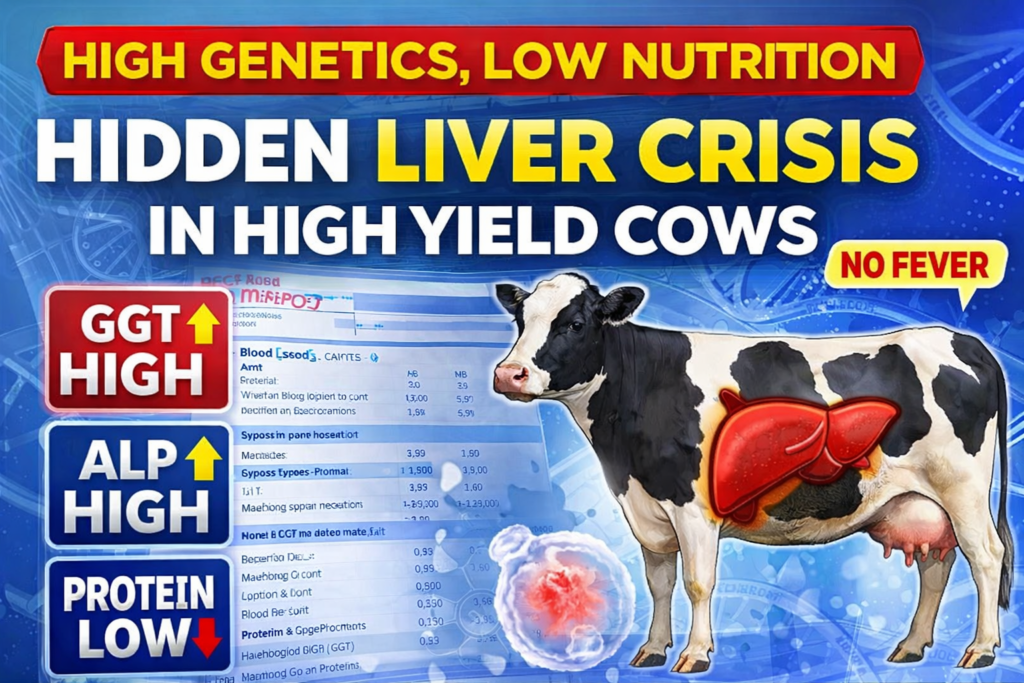
Most people dairy farmers ignores the sings of their dairy animals just because their animals are looks fine from outside. But when problem begins and start showing in the form of lower milk production, broken BCS and dullness, their first reaction is what happened to my cows! I am providing them everything right. Liver function in cows gives blue print of their health.
First indication of problem is that when animal genetic capacity is 60L milk but they are hovering below that and when we try to push them for production system broken down.
Modern dairy farming is witnessing an unprecedented paradox. On one hand, farmers are investing heavily in sexed semen, elite embryos, and imported genetics. On the other hand, the same herds are struggling with falling milk yield, poor body condition, lameness, and fertility problems — often without any obvious disease or fever.
Farmers often share blood reports of their animals with me, and i found consistent pattern of metabolic load without any obvious infection or disease.
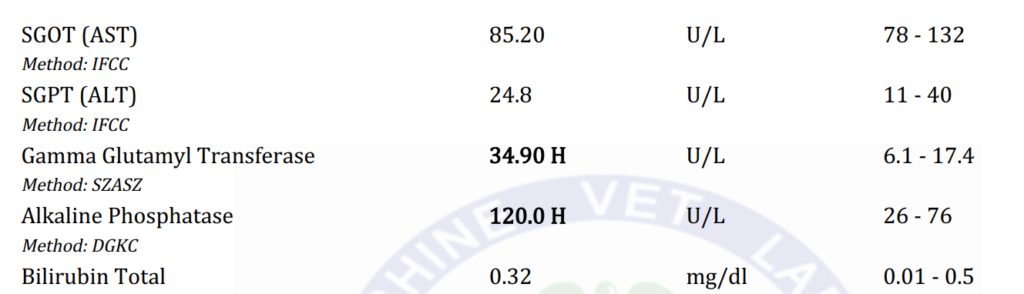
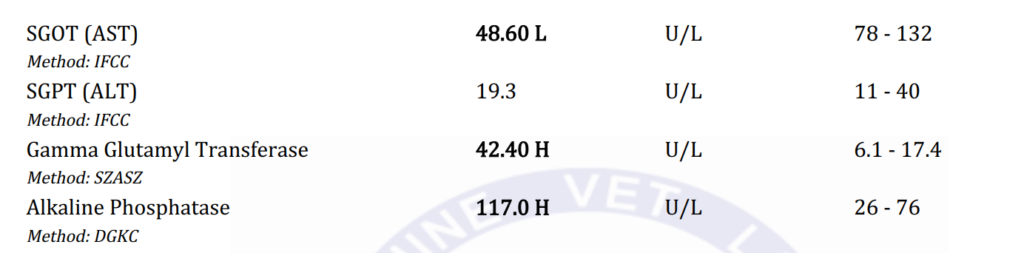
Blood reports start showing unfamiliar patterns:
- Elevated GGT
- Increased Alkaline Phosphatase (ALP)
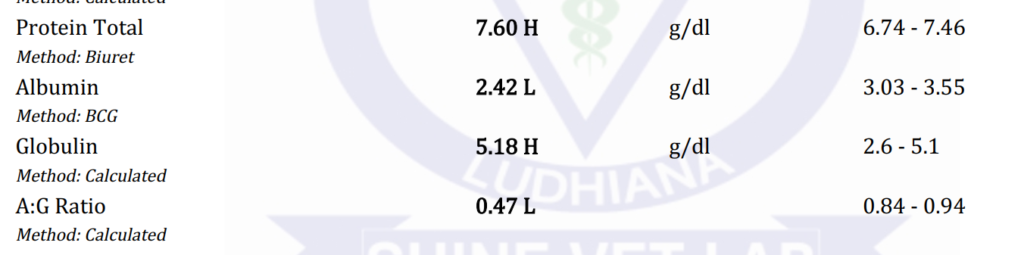
- Low or borderline Albumin
- Altered Total Protein ratios
These parameters were rarely discussed when cows produced 20-25 litres of milk. But today, in herds producing 35–50 litres per cow, liver health has become a central determinant of production capacity.
This article explains why liver health matters more than ever, how nutrition silently damages liver function, and why high genetics alone cannot deliver high production.
Why Liver Health Is Critical in High Yielding Dairy Cows
The liver is not just a metabolic organ; it is the control centre of production.
In high producing cows, the liver regulates:
- Energy partitioning
- Fat metabolism
- Protein synthesis
- Detoxification of rumen-derived toxins
- Hormone metabolism
As milk production increases, hepatic workload rises exponentially — not linearly.
Aaj ki high producing cows me liver sirf ek organ nahi raha.
Ye poori production chain ka controller ban chuka hai.
Jitna zyada doodh, utna zyada liver pe pressure.
If liver capacity is exceeded, cows do not always show classical disease signs. Instead, they show performance failure.
Understanding GGT: A Marker of Load, Not Disease
Gamma Glutamyl Transferase (GGT) is often misunderstood.
In dairy cows, GGT is primarily associated with:
- Bile duct function
- Chronic hepatic stress
- Fat and toxin handling capacity
When GGT is elevated but AST remains normal, it indicates chronic nutritional or metabolic overload, not acute liver damage.
This distinction is critical.
High GGT in high yielding cows usually reflects:
- Excess dietary fat or oil
- Rumen barrier compromise leading to endotoxin absorption
- Chronic electrolyte and osmotic stress
- Prolonged negative energy balance
GGT ka badhna ye nahi batata ki liver kharab ho gaya hai.
Ye batata hai ki liver thak raha hai.
Aur thaka hua liver sabse dangerous stage hota hai — kyunki cow bahar se normal lagti hai.
Such cows rarely show fever, but they gradually reduce feed intake and milk yield.
Click to Join online dairy farming course – ऑनलाइन डेरी फार्मिंग कोर्स ज्वाइन करें क्लिक करें
Alkaline Phosphatase: The Liver–Bone Connection
Alkaline Phosphatase (ALP) is not exclusively a liver enzyme.
In dairy cows, ALP originates from:
- Bile canaliculi of the liver
- Bone (osteoblastic activity)
In high producing cows, elevated ALP often reflects:
- Subclinical laminitis
- Hoof stress
- Mineral imbalance
- Chronic calcium–magnesium dysfunction
This explains why elevated ALP is frequently accompanied by:
- Lameness
- Altered posture
- Difficulty standing or walking
ALP ka badhna aksar infection nahi hota.
Ye bone stress aur mineral imbalance ka signal hota hai,
jo high production ke pressure me develop hota hai.
Ignoring ALP as a “minor abnormality” means ignoring early structural breakdown.
Albumin: The Most Ignored Marker of Metabolic Health
Albumin is one of the most neglected parameters in dairy blood profiling.
Low albumin is often misinterpreted as:
- Low protein intake
- Poor quality feed
In reality, albumin reflects liver synthetic capacity, not protein quantity.
Albumin:
- Is synthesized exclusively in the liver
- Requires adequate energy and amino acid supply
- Declines during chronic metabolic stress
When cows experience rumen dysfunction, osmotic stress, or suppressed microbial protein synthesis, amino acid flow to the liver declines.
The liver prioritizes survival and immune proteins over albumin.
This leads to:
- Low albumin
- Normal or high globulin
- Reduced A:G ratio
Albumin kam hona protein kam hone ka proof nahi hai.
Ye proof hai ki liver ke paas albumin banane ki energy aur raw material nahi hai.
This state represents metabolic exhaustion, not nutritional deficiency.
Why Total Protein Alone Is Misleading
Many farmers and practitioners rely solely on total protein values.
This is a critical mistake.
Two cows may have identical total protein levels, yet vastly different metabolic states.
- High globulin + low albumin = chronic stress or immune activation
- Normal total protein does not mean normal liver function
Globulins may increase without leukocytosis, indicating silent immune stimulation, often linked to endotoxin absorption from the rumen.
The High Genetics–Low Nutrition Paradox
Modern dairy genetics have advanced faster than nutrition management.
While genetic potential has increased:
- Ration design remains outdated
- DCAD is poorly understood
- Rumen osmolarity is ignored
- Liver load is underestimated
As a result, cows are genetically capable but metabolically constrained.
Hum genetics ko future me le gaye,
lekin nutrition ko past me chhod diya.
Isliye animals apni maximum capacity achieve nahi kar pa rahe.
High production is not achieved by semen alone.
It requires metabolic infrastructure.
Why Traditional Feeding Strategies Fail Today
Feeding practices that worked for low-producing cows fail in high yielders due to:
- Excess sodium or potassium load
- Fat overload
- Poor fiber effectiveness
- Suppressed microbial protein synthesis
- Chronic liver stress
These failures do not cause disease — they cause performance collapse.
Rethinking Dairy Health: From Disease to Metabolism
In high producing herds:
- Absence of fever does not equal health
- Normal appetite does not equal metabolic balance
- Milk drop is often the first clinical sign
Blood biochemistry now reveals what clinical examination cannot.
Conclusion: The Future of Dairy Lies in Metabolic Precision
The next era of dairy farming will not be driven by genetics alone.
It will be driven by precision nutrition, liver health management, and metabolic monitoring.
Understanding GGT, ALP, albumin, and protein fractions is no longer optional — it is essential.
High production sirf doodh ka game nahi hai.
Ye liver, rumen aur nutrition ke beech coordination ka result hai.
Farmers and professionals who understand this will unlock real genetic potential.
Those who ignore it will continue chasing production without results.
We at Ali Veterinary Wisdom working dedicatedly with farmers for the improvement of animal’s nutrition, heath and production, you can avail our consultancy services for feed formulation and her management advice.
Feed formulation services is chargeable