
Use of Copper Sulphate in Poultry
The use of copper sulphate in poultry is very common. In many farms, it is the first thing used whenever toxicity is suspected. However, improper and high-dose use of copper sulphate can itself lead to toxicity instead of correcting the problem.
Copper is an essential trace mineral required by poultry in very small amounts. According to NRC, 8 ppm copper is recommended in poultry diets, while some commercial manuals mention levels up to 15 ppm. Copper is not an expensive mineral, and therefore true dietary deficiency is rarely seen in poultry.
Because of this, any additional copper sulphate added through feed or water has therapeutic or toxic implications, depending entirely on the dose and situation.
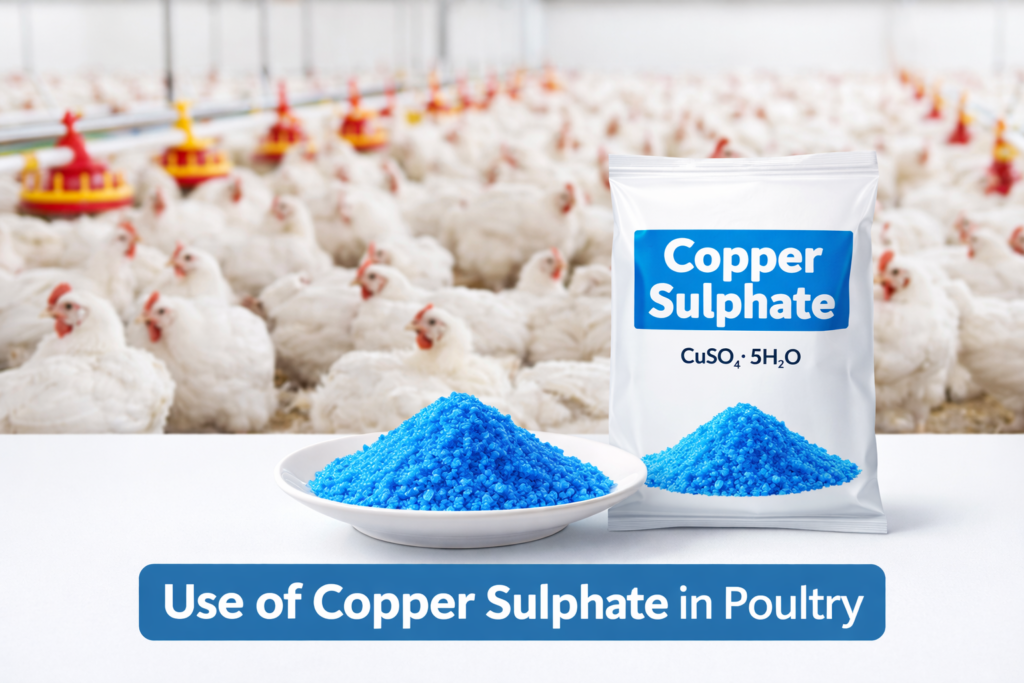
Nutritional and Therapeutic Use of Copper Sulphate
Copper sulphate has two distinct uses in poultry:
- Nutritional use (as a trace mineral)
- Therapeutic use (as an antimicrobial and antifungal agent)
Therapeutic use refers to its ability to act against bacteria, fungi, algae, and other living organisms. In poultry, copper sulphate is mainly used against fungal infections, not against feed or chemical toxicities.
How Does Copper Sulphate Work?
The biologically active component of copper sulphate is the copper ion, which has toxicological properties. Copper ions bind to functional groups of proteins present in fungi and algae, leading to protein denaturation, cell damage, and leakage of cellular contents.
An important point to understand is that copper sulphate works only against living organisms.
The belief that copper sulphate works against toxicity is a myth. In fact, during toxicity conditions, copper sulphate itself can become an additional toxic stress.
Most toxicities seen in poultry are due to pre-formed mycotoxins present in poor-quality maize or other ingredients. These include aflatoxins, DON, and fumonisins. Such toxins are highly resistant to heat and processing, and even toxin binders can bind them only to a limited extent.
Copper sulphate has no effect on pre-formed mycotoxins.
Why Copper Sulphate Should Be Used with Caution During Toxicity
Most toxicities in poultry are linked to fungal contamination and mycotoxins. Because fungi are involved, farmers often use copper sulphate assuming it will solve the problem.
However, copper creates a highly oxidative environment inside the body. Mycotoxins also generate free radicals. Together, this oxidative stress reduces immunity and can increase mortality instead of reducing it.
This is the main reason copper sulphate should not be blindly used during suspected toxicity cases.
Real Life Copper Toxicity Case in Broiler Flock
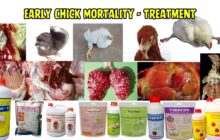
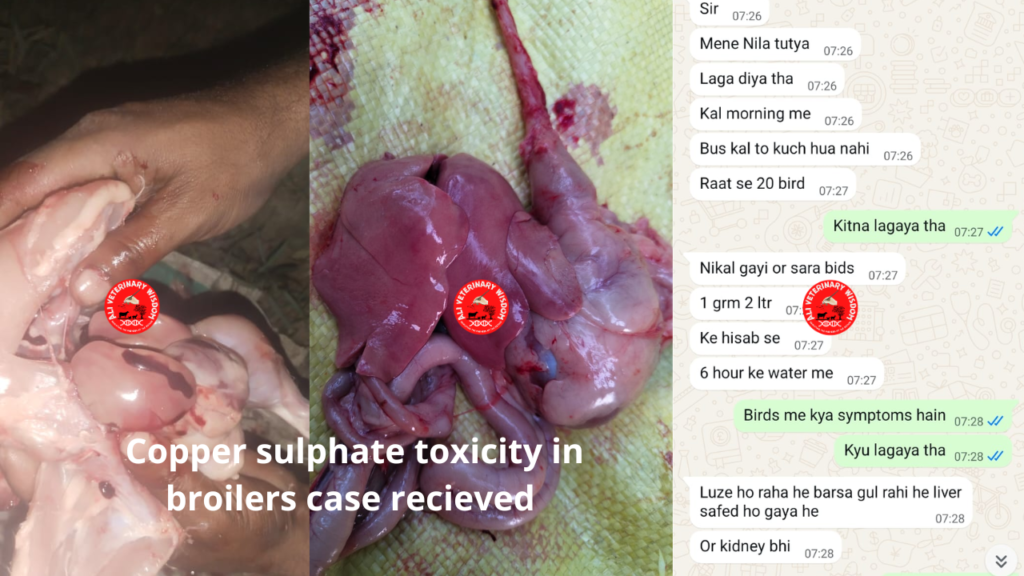
I have remember that on one day early morning i had recieved a call from farmer who was literally weeping on call and ask for help because his birds were dying in front of his eyes. He sent me its videos and pics. I also get surprised after looking at pics and vidoes where birds are loose and sick showing very strange condition. On that morning i witnessed copper toxicity or toxicosis which is also known as copperiedus in healthy broiler flock. Liver and other organs too were very fragiled as shown in figure. But that flock was managed and mortality get controlled by evening through use of Nexamune and Carnitek mediciation.
Safe and Correct Use of Copper Sulphate in Poultry
Copper sulphate has limited but specific use in poultry farming and should be applied only where it is clearly indicated.
- Copper sulphate has very limited routine use in poultry except in cases of visible fungal infections
- Aspergillus fumigatus is the most common etiological agent
- Aspergillosis usually occurs in the form of an outbreak, not sporadically
- Common age group affected: 10 days to 10 weeks
- Chicks below 3 days of age are highly susceptible
Predisposing factors include:
- Excessive antibiotic use
- High litter moisture and warmth
- Poor ventilation
- Poor immunity
- Contaminated or dirty hatchery conditions
Other fungi such as Candida, Mucor, Trichophyton, and Torulopsis may also infect poultry birds.
Recommended Dosage in Drinking Water
- 1 gram copper sulphate per 3–5 liters of water
- Duration: 7 to 10 days
During this period:
- Do not add any other medicine in feed
- Stop all antibiotic treatments
- Use immune boosters in separate water lines, especially Vitamin E, Vitamin C, and Selenium
Acidified Copper Sulphate
In some cases, acidified copper sulphate shows better results.
- Mix 1 g copper sulphate + 3 ml vinegar
- Add to 3–5 liters of drinking water
Use in Feed and Raw Material Management
- Copper sulphate may be used in feed when non-vegetarian ingredients like meat and bone meal or fish meal are included
- After prolonged use of high-dose, high-end antibiotics, copper sulphate use in feed may be justified
- Before using toxin binders, always check the label, as many already contain copper in sulphate or oxine form
- Copper sulphate is also used for fungal control in stored soybean DOC, maize, and other raw materials
A simple fungistatic combination using calcium propionate and copper sulphate can be helpful for fungal flushing after antibiotic treatment.
Final Advisory Note
Copper sulphate is not a routine poultry medicine. Its incorrect use can worsen toxicity and increase mortality. It should be used only with a clear understanding of the problem, correct dosage, and proper farm conditions.
When in doubt, veterinary guidance should always be taken before using copper sulphate in poultry.
❓ अक्सर पूछे जाने वाले सवाल (FAQ)
❓ क्या कॉपर सल्फेट पोल्ट्री में टॉक्सिसिटी के लिए इस्तेमाल किया जा सकता है?
नहीं। यह एक आम गलतफहमी है। कॉपर सल्फेट टॉक्सिन को neutral नहीं करता। उल्टा, टॉक्सिसिटी के समय यह शरीर में oxidative stress बढ़ाकर नुकसान भी कर सकता है।
❓ कॉपर सल्फेट पोल्ट्री में किस काम के लिए उपयोगी है?
कॉपर सल्फेट का उपयोग मुख्य रूप से फंगल इन्फेक्शन, खासकर एस्परजिलोसिस में किया जाता है। यह जीवित फंगस पर काम करता है, न कि पहले से बने टॉक्सिन पर।
❓ क्या हर फंगल समस्या में कॉपर सल्फेट देना सही है?
नहीं। कॉपर सल्फेट तभी देना चाहिए जब फंगल इन्फेक्शन के स्पष्ट लक्षण हों या आउटब्रेक हो। बिना जांच या शक के आधार पर इसका उपयोग नहीं करना चाहिए।
❓ पोल्ट्री में कॉपर सल्फेट की सही मात्रा क्या है?
पीने के पानी में सामान्यतः
1 ग्राम कॉपर सल्फेट / 3–5 लीटर पानी
7 से 10 दिन तक दिया जाता है।
मात्रा बढ़ाने से फायदा नहीं, बल्कि नुकसान हो सकता है।
❓ क्या कॉपर सल्फेट के साथ एंटीबायोटिक देना चाहिए?
नहीं। कॉपर सल्फेट देते समय एंटीबायोटिक बंद रखना चाहिए। साथ में केवल इम्युनिटी सपोर्ट जैसे विटामिन E, C और सेलेनियम देना बेहतर रहता है।
❓ क्या कॉपर सल्फेट चूजों में सुरक्षित है?
बहुत छोटे चूजे (3 दिन से कम) कॉपर सल्फेट के प्रति अधिक संवेदनशील होते हैं। इस उम्र में इसका उपयोग बहुत सावधानी से और केवल जरूरत होने पर ही करना चाहिए।
❓ क्या कॉपर सल्फेट फीड में भी इस्तेमाल किया जाता है?
हाँ, कुछ विशेष परिस्थितियों में जैसे:
- फिश मील या मीट-बोन मील के उपयोग पर
- लंबे समय तक हाई-डोज एंटीबायोटिक के बाद
- कच्चे माल के स्टोरेज में फंगल कंट्रोल के लिए
लेकिन यह रूटीन प्रैक्टिस नहीं है।
❓ क्या कॉपर सल्फेट हर पोल्ट्री फार्म में जरूरी है?
नहीं। कॉपर सल्फेट कोई सामान्य पोल्ट्री मेडिसिन नहीं है। इसका गलत और बार-बार उपयोग इम्युनिटी कम कर सकता है और मोर्टेलिटी बढ़ा सकता है।
❓ कॉपर सल्फेट कब नहीं देना चाहिए?
- माइकोटॉक्सिन की शंका में
- बिना फंगल लक्षण के
- ज्यादा मोर्टेलिटी वाले मामलों में बिना जांच
- पहले से ऑक्सिडेटिव स्ट्रेस वाली स्थिति में
ऐसे मामलों में पहले वेटरनरी सलाह जरूरी है।